An Unfinished Revolution: The Defiance of Uganda’s LGBTQ+ Community
In the shadow of Dictator Yoweri Museveni’s controversial Anti-Homosexuality Act, a powerful and multifaceted resistance movement is rewriting Uganda’s narrative. Far from the headlines of state-sponsored persecution, a story of profound courage, resilience, and strategic ingenuity is unfolding. This is not merely a tale of victimhood, but a complex chronicle of a community’s unwavering fight for existence. From the hidden safe houses of Kampala to the encrypted digital networks connecting activists, and from the courtrooms where brave lawyers challenge the law to the underground galleries where art becomes protest, Uganda’s LGBTQ+ community and its allies are mounting a formidable defence of their fundamental human rights. This in-depth exploration delves into the heart of this struggle, uncovering the colonial roots of homophobia, the power of personal storytelling, the critical role of progressive faith, and the pan-African solidarity that is challenging a regime’s manufactured narrative.  Discover how, through acts of love, hope, and daily survival, a community is ensuring that its future, though perilous, remains a story not of erasure, but of an unbreakable spirit.
Uganda’s LGBTQ+ Resistance: Stories of Defiance, Faith, and Freedom
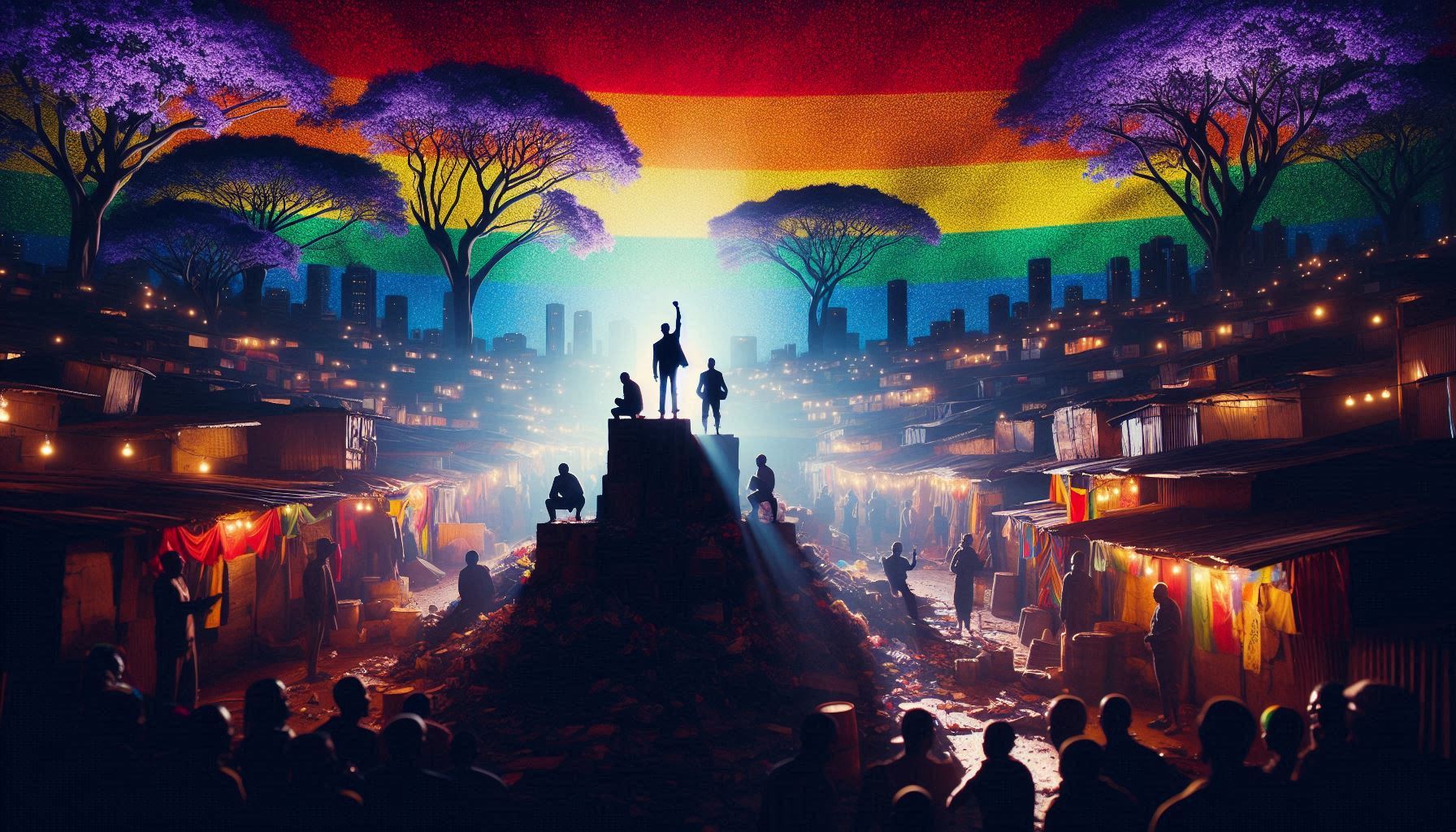
In the heart of Kampala, beneath the sprawling canopy of jacaranda trees that paint the city in shades of purple and gold, a quiet storm brews. It is not one of thunder or violence, but of conscience—of voices rising against a law that has become both a symbol of fear and a catalyst for profound resilience. Uganda’s narrative around LGBTQ+ rights is often dominated by the controversial Anti-Homosexuality Act (AHA). But beyond the headlines and international condemnation lies a deeper, more powerful story: one of a community’s unwavering resilience, a reclamation of identity, and a movement blending faith, art, and activism to challenge oppression and rewrite history.
 This is an exploration of that spirit—a journey into the heart of queer life in Uganda, where digital activism meets divine love, and where progressive Christianity stands defiant against religious extremism.
20 Key Pillars of the Resistance: An In-Depth Exploration
The Colonial Legacy: The Roots of Criminalisation
In the grand narrative often spun by the State House in Entebbe, the persecution of LGBTQ+ individuals is framed as a valiant defence of pristine African traditions. Yet, to understand the true origin of this legal vendetta, one must journey not into the heart of the Ugandan countryside, but to the dusty archives of London and the parliamentary chambers of Victorian Britain. The story begins not with an innate cultural hatred, but with a colonial import, a foreign imposition that has been shrewdly repackaged as indigenous virtue. As the old adage goes, “A tree planted in poisoned soil cannot bear wholesome fruit.” Uganda’s anti-homosexuality laws are precisely that—a toxic seed sown by the British Empire, now nurtured by a dictator for his own political sustenance.
The Victorian Imposition: A Law Born in London
Before the formal establishment of the British Protectorate over Uganda in 1894, historical and anthropological evidence points to a more nuanced landscape regarding gender and sexuality among the various kingdoms and communities. While not universally celebrated, same-sex relations and diverse gender expressions existed within specific cultural and spiritual contexts, often without the systematic, state-sanctioned persecution seen today.
 The poison was introduced with the Indian Penal Code of 1860, a legal framework crafted by the British following the 1857 Indian Rebellion to impose a strict, “civilising” moral order upon its colonies. Central to this was Section 377, which criminalised “carnal intercourse against the order of nature.” This vague and prejudicial law was not a response to any local demand in Uganda; it was a reflection of Victorian England’s own social anxieties and rigid Christian mores. As the British colonial administration entrenched its power, it applied this legal code across its African territories, including Uganda. The “Black Peril” laws, designed to police sexual relations between Black men and white women, were part of this same apparatus of control, but the laws against “unnatural” acts applied universally, effectively pathologising and criminalising forms of intimacy that had previously existed outside the state’s purview.The colonialists framed this as a moral crusade. Missionaries, arriving hand-in-hand with administrators, preached a gospel that conflated European cultural norms with Christian divinity, systematically stigmatising indigenous practices they deemed “savage” or “sinful.” The powerful kingdoms of the Great Lakes region, in the process of being subjugated, were forced to adopt this foreign legal and moral code as part of the price of survival, if not outright collaboration. The law became a tool of control, a means to dismantle existing social structures and replace them with a system where the coloniser defined what was legal, moral, and authentically “human.”
The Bitter Harvest: Dictator Museveni as the Colonialism’s Successor
Following independence, this colonial relic, now codified as Section 145 of Uganda’s Penal Code, was left untouched. It lay dormant for years, a legal landmine waiting to be activated. Its revival and subsequent escalation into the Anti-Homosexuality Acts of 2014 and 2023 are not a return to a pre-colonial utopia, but the very opposite. It is the work of a regime, led by Dictator Yoweri Museveni, that has expertly learned the lessons of its colonial masters.
The current government has not dismantled the colonial framework; it has enthusiastically adopted its mantle. Just as the British used divisive tactics to rule, Museveni’s regime has weaponised this imported bigotry to create a convenient “other” — a scapegoat to unite a fractured populace against a common enemy and distract from the regime’s own profound failures. Rampant corruption, crumbling public services, and a desperate youth demographic are all swept aside by the spectacle of a moral panic over sexuality. In a stunning act of historical irony, the regime now positions itself as the guardian of “African sovereignty” and “traditional values,” all while vigorously enforcing a law whose conceptual DNA is wholly European. They rail against “foreign influences” even as they parrot the very moral panics of 19th-century London. The resistance movement has been sharp to highlight this profound contradiction. Activists, scholars, and community leaders point out that the state, in its fervent persecution of queer Ugandans, is not defending culture but perpetuating a colonial-era crime. They argue that the true betrayal of African dignity is not loving freely, but a dictator clinging to a fading imperial lawbook to maintain his grip on power.The tree, planted in the poisoned soil of colonial prejudice, has indeed borne a bitter harvest. The fruit is fear, violence, and state-sanctioned hatred. The resistance, therefore, is not just a fight for sexual rights, but a profound act of decolonisation—an effort to uproot this poisonous tree and reclaim the right for Ugandans to define their own identities, free from the dead hand of a long-departed empire and the cynical manipulations of its successor.
Reclaiming a Pre-Colonial Past: Unearthing a Silenced Heritage
In the grand narrative meticulously constructed by Dictator Museveni’s regime, queerness is presented as a foreign import, a “decadence” from the West that threatens the very fabric of the nation. This rhetoric, however, is built upon a foundation of historical amnesia. Against this powerful state-sponsored fiction, a courageous movement of activists, historians, and students is engaged in a profound act of archaeological recovery. They are delving into dusty archives, revisiting oral traditions, and challenging the very definition of what it means to be African. Their mission is to prove that the tree of their identity has deeper, more complex roots than the regime would have the world believe. As the adage goes, “A lie travels the world while the truth is still putting on its boots.”
This reclamation of history is the slow, deliberate process of the truth lacing up, preparing for a long journey back into the national consciousness.The Regime’s Fabricated Past and the Archives of Resistance
The regime’s power relies on a simplistic, monolithic version of history—a myth of a pristine, heterosexual pre-colonial past. This invented tradition serves as a potent tool for nationalism, creating a pure “us” against a corrupt “them.” To challenge this is to challenge a core pillar of the state’s legitimacy.
The resistance, therefore, has turned to the one witness that cannot be entirely silenced: history itself. In the archives of the Uganda Museum, in the transcriptions of early missionary and colonial officer reports, and, most importantly, in the living memory of oral traditions kept by elders, a different story is emerging. These researchers are not inventing a new past; they are piecing together a fragmented one, deliberately obscured by a century of colonial and now autocratic revisionism. They operate with the understanding that to be stripped of your history is to be stripped of your legitimacy, and so the fight for the future is inextricably linked to the fight for the past.Evidence of a Nuanced World: Beyond the Binary
What this intellectual resistance is uncovering is evidence of pre-colonial societies that possessed far more nuanced understandings of gender and sexuality than the rigid, Victorian-imposed binary allows for. These were not necessarily societies of universal acceptance, but they were ones where certain forms of gender non-conformity and same-sex intimacy had recognised, and at times revered, places within the social and spiritual order.
Two key examples illustrate this reclaimed heritage:
The Mudoko Dako of the Lango: Among the Lango people in northern Uganda, the mudoko dako were biologically male individuals who lived as women. They were not merely tolerated; they occupied a specific and accepted social category. They could marry men, and their presence was often considered bringing good fortune to a household. Colonial administrators, bewildered by this, pathologised them in their reports, but to the Lango, they were simply part of the diverse tapestry of human identity.
Spiritual Intermediaries in the Buganda Kingdom: In the powerful Buganda kingdom, historical accounts and oral traditions point to certain spiritual roles that transcended conventional gender norms. Some royal pages or certain individuals associated with the lubale (spirit) cults engaged in same-sex practices or adopted gender-fluid expressions as part of their sacred duties. These roles were embedded in complex power structures and spiritual beliefs, illustrating that identity was not always a simple matter of male and female.
These findings are revolutionary. They prove that the current regime’s version of “African tradition” is a hollow fabrication. The resistance uses this evidence to make a powerful counter-argument: that it is not queerness that is un-African, but rather the violent hatred of queerness that is a colonial import.
The Victorian British, with their strict moral codes, systematically demonised and outlawed these indigenous identities, and the modern Ugandan state has become the unwitting—or perhaps all too witting—heir to this colonial prejudice.A Powerful Act of Decolonisation
This historical reclamation is far more than an academic exercise; it is a vital strategy of survival and liberation. For a young queer Ugandan, told daily that they are a traitor to their culture, learning that their ancestors may have had a word, a role, or a place for someone like them is transformative. It is an act of restoring personhood. It shifts the accusation of being “un-African” from the individual back onto the state, which is enforcing a foreign-imposed morality.
By proving that the roots of Ugandan identity are diverse and inclusive, the resistance seizes the regime’s most powerful weapon—the rhetoric of cultural authenticity—and turns it against them. They are demonstrating that the true defenders of Uganda’s heritage are not the dictators in State House, but those digging in the archives and listening to the whispers of the elders. The truth, now that its boots are on, is slowly beginning its journey, and with every recovered story, the regime’s lie becomes harder to sustain.The Anti-Homosexuality Act: A Catalyst for Covert Organisation
In his protracted reign, Dictator Museveni has often relied on a familiar tactic of autocrats: the creation of a visible, demonised enemy to consolidate power and distract from systemic failures. The Anti-Homosexuality Act (AHA) was intended as the ultimate expression of this strategy—a legislative sledgehammer designed to erase the LGBTQ+ community from public life through fear, imprisonment, and violence. Yet, in a profound miscalculation, the regime has discovered that a community pushed to the brink does not simply vanish; it adapts, evolves, and organises with a resilience that top-down oppression can scarcely comprehend. The AHA, in its Draconian overreach, did not crush the spirit of resistance; it became the very crucible in which a more sophisticated, decentralised, and formidable movement was forged. As the adage goes, “Attempting to extinguish a fire with gunpowder only scatters the embers and starts a wider blaze.” The AHA was Museveni’s gunpowder, and the result has been the scattering of a resistance that is now burning brighter and in more places than ever before.
From Visibility to Invisibility: The Forced Evolution of Resistance
Prior to the AHA’s passage, elements of the community had achieved a degree of visibility, however fragile. There were discreet social networks, advocacy groups that operated with a measure of caution, and a nascent sense of collective identity. The AHA sought to annihilate this entirely by criminalising not just acts, but identity itself, and by mandating citizens to spy on one another.
This forced a radical and immediate shift in strategy. The movement had to abandon any remaining vestiges of public-facing activism and plunge completely into the shadows. This was not a retreat, but a tactical recalibration for survival. The old, more centralised models of organisation were too vulnerable; a single raid could decapitate an entire network. The community was compelled to dismantle its own centralised structures and re-emerge as a hydra—a decentralised organism where cutting off one head meant little, as countless others operated independently.The Architecture of a Hidden Ecosystem
This covert organisation manifests in a sophisticated, multi-layered ecosystem built for endurance:
Compartmentalised Support Networks: Safe houses are no longer run by known organisations, but by loose, rotating cells of trusted individuals. A landlord in Ntinda, a shopkeeper in Kisenyi, and a nurse in Gulu may form an unlinked chain of sanctuary, where no single person knows the full extent of the network. Assistance—be it a safe bed, medical aid, or food—is delivered through a series of cut-outs, protecting all involved.
Encrypted and Coded Communication: The movement has become digitally agile. Communication happens on encrypted platforms where identities are masked. Coded language, borrowed from mundane daily life, is used to signal safety or danger. A seemingly innocent message about “market prices” or a “family visit” can carry life-saving instructions, rendering public surveillance largely ineffective.
Decentralised Leadership and Grassroots Initiative: Leadership is no longer vested in a few well-known figures who can be easily targeted. Instead, it has devolved to a grassroots level. University students organise secret reading groups to discuss banned historical texts. Artists coordinate underground exhibitions in disused warehouses. Groups of friends form their own micro-savings cooperatives to achieve economic independence. This creates a movement without a central command, making it incredibly difficult for the regime’s security apparatus to identify and eliminate its heart, because it has a thousand hearts beating simultaneously.
The Weaponisation of Trust: In a law that demands betrayal, the community has been forced to refine the very concept of trust into a defensive weapon. Vetting processes are meticulous, and social bonds are strengthened by shared peril. This has created a formidable internal cohesion. While the regime seeks to turn neighbour against neighbour, the community has been compelled to build bonds of fidelity that are, by necessity, stronger than the state’s instruments of fear.
A Movement Harder to Dismantle
Paradoxically, by forcing the LGBTQ+ movement entirely underground, Dictator Museveni has made it more resilient and harder to eradicate. A visible protest can be dispersed with tear gas and bullets. A registered organisation can have its accounts frozen and its offices shuttered. But how does a state dismantle a whisper? How does it arrest a rumour? How does it raid a support network that exists only as a series of ephemeral, encrypted messages and transient safe spaces?
The regime finds itself in the futile position of trying to grasp smoke. The more violently it squeezes, the more the community disperses and permeates the cracks in the society itself. The AHA was meant to be a final solution, but it has instead functioned as a brutal and unforgiving training ground. It has taught the community the disciplines of secrecy, security, and mutual aid under extreme duress. The embers, scattered by the regime’s own heavy hand, have indeed started a wider, smarter, and more determined blaze—one that now glows in the hidden corners of every city and village, waiting for the day it can safely step back into the light.Underground Art and Culture as Protest: The Unsilenced Canvas
In the shadow of Dictator Museveni’s regime, where the state wields the law as a cudgel against identity, a quieter, more profound rebellion is taking root. It is a rebellion not of shouted slogans, but of brushstrokes; not of public marches, but of whispered verse. Forced from the sunlight of public expression by the Draconian Anti-Homosexuality Act, Uganda’s queer community has transformed the hidden spaces of the nation—disused garages, private courtyards, encrypted digital vaults—into vibrant theatres of defiance.
Here, art has ceased to be mere decoration and has become a formidable weapon of existential resistance. This flourishing of underground culture is a direct rebuttal to the state’s narrative of shame, asserting that love and identity are not crimes, but wellsprings of beauty and strength. As the adage goes, “The most powerful whisper can drown out the loudest shout.” In the hidden galleries of Uganda, a chorus of whispers is rising, creating a resonance that the regime’s brute force cannot silence.The Aesthetics of Existence: Forms of Covert Creative Resistance
This artistic insurgency is not monolithic; it is a diverse and adaptive ecosystem of creative expression, each form tailored to evade censorship and pierce the heart of the oppressor’s narrative.
The Visual Canon: Murals and Paintings: In concealed spaces—a trusted landlord’s warehouse, a secluded compound wall—artists are creating a visual lexicon of queer Ugandan identity. Their work often deliberately incorporates and subverts traditional motifs and pre-colonial symbolism. A painting might depict two lovers in embrace against the backdrop of a Baganda barkcloth pattern, explicitly tying their existence to a heritage that predates the current regime and its imported laws.
These works are ephemeral; they are documented digitally and shared through covert channels before often being painted over to protect their creators, living on as ghostly images in a shared digital consciousness.The Poetry of Defiance: The written and spoken word has become a primary vessel for testimony. Poets craft works that speak of love, longing, and loss in a context where such emotions are illegal. These poems are shared on folded scraps of paper, recited in hushed tones at secret gatherings, or distributed as voice notes on encrypted apps. Their power lies in their visceral humanity, directly challenging the state’s attempt to dehumanise the community by reducing them to a legal statute. They are the intimate, unassailable proof of a living, feeling people.
Music and Sonic Resistance: Composers and musicians are producing songs that serve as both coded anthems and emotional balm. The lyrics often employ metaphorical language, speaking of “a different kind of rain” or “a secret harvest,” allowing the music to be heard by initiates as an affirmation of their truth, while remaining ambiguous to hostile ears. These songs are performed in the strictest secrecy, creating moments of collective catharsis and solidarity that fortify the spirit against the relentless pressure of the outside world.
Guerrilla Film and Theatre: Using consumer-grade equipment and operating in extreme secrecy, filmmakers are documenting their realities. These are not films for international festivals; they are acts of internal witness. They record testimonies, document secret performances, and create fictional narratives that imagine a future of freedom. Similarly, underground theatre productions in makeshift venues offer a space where stories can be acted out, providing both performers and audience with the transformative power of seeing their lives reflected at them, not as caricatures of sin, but as narratives of dignity.
The Strategic Power of Cultural Protest
The significance of this artistic movement extends far beyond its aesthetic value. It functions as a multi-faceted strategic tool in the broader resistance.
Reclaiming Narrative Authority: The regime seeks to control the story of Uganda. By creating their own art, queer Ugandans seize the pen and write themselves into the national story not as a problem, but as poets, painters, and musicians. They redefine their identity on their own terms.
Psychological Fortification: In an environment designed to induce shame and isolation, the creation and consumption of affirming art is a radical act of self-love. It is a constant, internal reminder that they are not what the law says they are—they are beautiful, they are creative, they are whole.
Building a Covert Community: These artistic endeavours create invisible networks of trust and collaboration. The act of organising a secret exhibition or sharing a banned poem forges bonds that are stronger than the state’s rhetoric of hatred. It builds a nation within a nation, bound by shared culture rather than imposed fear.
In conclusion, the underground art scene in Uganda is the soul of the resistance.
While the state may control the statutes and the security apparatus, it has no power over the imagination. The artists working in the shadows understand a fundamental truth: that a regime which must outlaw poetry and paintings is a regime that is already ideologically bankrupt. Their work ensures that long before the laws may change, the hearts and minds of a community are already living in the freedom of their own creation, proving that the canvas, however hidden, remains an unsilenced witness to their truth.The Role of Faith: Progressive Christianity Pushes Back
Within the carefully orchestrated public narrative of Dictator Museveni’s Uganda, the loudest religious voices are often those that bless the regime’s agenda, framing the Anti-Homosexuality Act as a righteous defence of national morality. Yet, beneath this cacophony of condemnation, a profoundly different theological current is flowing—one of quiet defiance and radical compassion.
A brave and growing contingent of progressive clergy and congregations is emerging, refusing to cede the pulpit to hatred. In a powerful act of theological resistance, they are preaching a gospel of inclusion, creating sanctuaries of safety, and reclaiming the figure of Christ from the politicians who have weaponised Him. As the adage goes, “The stillest waters often run the deepest.” While the public face of Ugandan Christianity may appear monolithic, these deep, still currents of progressive faith are carving a new path, offering a spiritual lifeline to those whom the state has cast out.A Counter-Narrative: Reclaiming Scripture from the Firebrands
The theological project of these progressive voices is, first and foremost, one of reclamation. They directly challenge the interpretation of scripture used to justify the AHA, arguing that it is a selective and politically motivated reading, often imported from American evangelical sources rather than rooted in a holistic understanding of the Gospels.
Their sermons and teachings consciously pivot towards the core tenets of Christ’s ministry: compassion, mercy, and a preferential option for the marginalised. They cite his deliberate association with tax collectors, prostitutes, and lepers—the very outcasts of his day—as the definitive model for Christian conduct. In this theology, a person’s identity is not a sin; the real transgression is the hatred and exclusion practised by the powerful. They reframe the conversation from one of sexual purity to one of social justice, arguing that a faith that does not protect the vulnerable is a faith that has lost its way. This is not a liberal reinterpretation for convenience, but a return to what they see as the disruptive, radical love at the heart of the Christian message.The “Chapel Without Walls”: Faith in Practice
This theology is not confined to abstract debate; it is made tangible in the creation of what has become known as the “Chapel Without Walls.” This is not a physical building with a spire, but a fluid and clandestine network of pastoral care and worship.
Underground Congregations: In private homes, the back rooms of community centres, and even in secluded outdoor spaces, these pastors hold services for those who would be turned away or reported elsewhere. Here, scripture is read not as a tool of condemnation but as a source of affirmation. Prayers are offered for safety, for strength, and for the healing of trauma inflicted by a hostile society.
Pastoral Care as a Subversive Act: For these clergy, the very act of offering pastoral counselling to a queer individual, or presiding over a commitment ceremony for a same-sex couple, becomes an act of profound political and spiritual defiance. They provide the rites of the church—blessing, communion, and counselling—to a community the state has declared unworthy of such grace, directly challenging the regime’s attempt to de-sacralise their lives.
A Ministry of Practical Support: The “Chapel Without Walls” extends beyond spiritual solace. It often functions as an informal node in the wider resistance network. A pastor might connect individuals with safe housing, discreet medical care, or legal aid, understanding that faith without practical action is empty. This merges spiritual sanctuary with physical survival, embodying the biblical call to “love thy neighbour” in the most dangerous of circumstances.
The Courage of the Counter-Witness
The position these faith leaders occupy is one of extreme vulnerability. They face ostracism from their denominations, threats from their congregations, and the very real risk of state reprisal. To preach love in a climate of state-sponsored hate is to paint a target on one’s back. Their authority comes not from institutional power, but from the moral courage of their counter-witness. They stand as living proof that one can be a devout Christian and still reject the AHA; that one can be a patriotic Ugandan and still criticise the dictator’s use of faith as a cudgel.
In essence, this progressive Christian movement represents a critical fissure in the regime’s moral foundation. By asserting that true faith demands inclusion, they rob the state and its allied clerics of their claim to divine authority. They demonstrate that the battle for Uganda’s soul is not being waged solely in parliament or on the streets, but in the quiet, determined hearts of those who believe that God’s love, in its deepest expression, knows no borders and excludes no one.The Whisperers: Grassroots Community Building
In the grand, brutal theatre of Dictator Museveni’s Uganda, where the state performs its power through draconian laws and public condemnations, the most potent forms of resistance are often the quietest. While the Anti-Homosexuality Act (AHA) projects an image of monolithic control, its true failure is revealed not in the courtroom or the parliament, but in the hidden, humble spaces where life defiantly persists. Here, in back rooms fragrant with brewing tea, in tailor shops humming with sewing machines, and in secluded university halls, the most essential work of the resistance is undertaken by small, trusted cells known colloquially as “whisperers.”
These groups are the bedrock of the movement, transforming isolation into community and despair into resilience through the simple, revolutionary act of mutual care. As the adage goes, “A chain of many small, weak links, if woven together, can form an unbreakable rope.” The Whisperers are those individual links, weaving a network of support so diffuse and deeply embedded that the state’s sledgehammer cannot sever it.The Architecture of Trust in a Climate of Fear
The operational genius of the Whisperers lies in their structure, which is a direct and necessary adaptation to the regime’s tactics of surveillance and betrayal. They are the antithesis of a centralised, hierarchical organisation.
Compartmentalised Cells: Each group is intentionally small, often no more than five to ten individuals, bound by profound, pre-existing trust. These cells operate in isolation from one another. A cell of students at Makerere University has no knowledge of a cell of market traders in Kisenyi, and a group of artists in Mbale is unknown to one of nurses in Gulu.
This compartmentalisation is a critical security feature; the compromise of one group does not lead to the collapse of the entire network.The Sanctity of the Safe Space: The locations for their meetings are chosen for their banality and privacy. A rented room behind a busy shop, the storage area of a sympathetic business, a private compound on the edge of a village—these become impromptu sanctuaries. The very ordinariness of these settings provides the perfect camouflage, creating pockets of safety invisible to the outside world.
The Triage of Survival: More Than Just Talk
The function of these gatherings extends far beyond casual socialising. They perform a vital triage of survival, addressing the most fundamental needs that the state seeks to deny.
Psychosocial First Aid: In a society that pathologises their very being, these meetings provide a space for psychological decompression. Here, individuals can share their terror of being outed, their grief for lost family ties, or the trauma of a narrow escape without fear of judgement. This collective sharing of burden is a powerful antidote to the state’s strategy of psychological warfare, reaffirming to each member that they are not insane, and they are not alone.
The Informal Economy of Resistance: The Whisperers operate a grassroots system of mutual aid. If one member loses their home, the group quietly pools resources for temporary lodging. If another faces a medical emergency, they discreetly identify a safe clinic and contribute towards the cost. They share job leads with safe employers and warn each other about those known to be hostile. This creates an informal economy that allows members to navigate a world designed to make them destitute.
The Creation of Chosen Family: For many disowned by their biological relatives, these groups become a “chosen family.” They celebrate birthdays, mark promotions, and offer solace during times of sickness. This forging of kinship bonds is perhaps their most powerful function.
It directly counters the regime’s narrative that queer Ugandans are a threat to the family unit by demonstrating that they are, in fact, masterful builders of their own, more inclusive families based on loyalty and love rather than coercion and blood.
In conclusion, the Whisperers represent a profound truth: that against the overwhelming force of the state, the most resilient structure is not a fortress, but a network. They understand that the regime can outlaw identity, but it cannot outlaw the human need for connection. By meeting in whispers, they ensure their survival. By weaving their small, individual threads of courage together, they are creating the unbreakable rope that will, in time, secure their future.
Strategic Litigation and Brave Lawyers: Chiselling at the Pillars of Injustice
In a state where the judiciary is often perceived as an extension of the executive’s will, the courtrooms of Uganda have become an unlikely and profoundly consequential battlefield. While Dictator Museveni’s regime leverages the Anti-Homosexuality Act (AHA) as a tool of raw political power, a small, determined cadre of human rights lawyers is waging a parallel war—not with protests or pamphlets, but with legal precedent, constitutional arguments, and meticulous procedure. These advocates operate with the understanding that while a dictator may write a law with a flourish of his pen, it falls to them to challenge its legitimacy, word by word, clause by clause, in the arena specifically designed for such contest.
Their work is a masterclass in strategic patience, aiming not for a single, glorious victory, but for the gradual, deliberate erosion of the law’s foundation. As the adage goes, “Constant dripping wears away the stone.” These lawyers are the persistent, focused drip of water, chiselling legal cracks into the monolithic edifice of state-sponsored persecution.The Architecture of a Legal Challenge
The strategy employed by these lawyers is far from a simple plea for mercy; it is a sophisticated, multi-pronged legal assault on the very constitutionality of the AHA. They are not merely arguing that the law is harsh, but that its existence violates the fundamental principles upon which the Ugandan state is supposedly built.
The Right to Privacy and Human Dignity: At the core of their argument is the assertion that the AHA constitutes a gross and unwarranted invasion of the private sphere. They contend that the law, by criminalising consensual intimacy between adults, strips citizens of their inherent dignity and reduces them to subjects of state surveillance in their most personal lives. They frame this not as a special right for a minority, but as a universal right for all Ugandans—the right to be free from a government that seeks to police love and the bedroom.
The Violation of Freedom of Expression and Association: The lawyers meticulously challenge the sections of the AHA that criminalise the “promotion” of homosexuality. They argue that this vague and overbroad provision effectively outlaws identity itself, silencing any public discourse, support, or community-building. By doing so, it violates the constitutional guarantees of free speech and assembly, rendering an entire segment of the population legally mute and invisible.
The Principle of Equality Before the Law: A key pillar of their litigation is the argument that the AHA creates a second class of citizens. It explicitly denies a specific group the rights to privacy, family life, and freedom from discrimination that are enjoyed by all others. This, they argue, is a fundamental breach of the constitutional promise of equality, making the law inherently discriminatory and therefore invalid.
The Courage of the Courtroom Warrior
The work of these lawyers is an act of immense professional and personal courage. They operate in a climate where defending a client accused under the AHA can see them branded as sympathisers or collaborators. They face social ostracism, threats to their safety, and the constant pressure of a state apparatus that views their work as an act of treachery.
Their court appearances are high-stakes theatrical performances. They must present their arguments with unassailable legal rigour, knowing that any misstep could be used to discredit not just a single case, but the entire legal strategy. They often represent clients who are terrified and traumatised, requiring them to be not only advocates but also sources of reassurance and stability. Every procedural win—a bail application granted, an unjust charge dismissed—is a tactical victory that keeps a client out of prison and maintains the momentum of their broader campaign.The Strategic Impact: Beyond the Single Case
The objective of this litigation extends beyond the fate of individual defendants. Each case is a platform to publicly expose the AHA’s absurdity and brutality. A favourable ruling, even on a minor procedural point, sets a precedent that can be used to challenge the law more broadly. An unfavourable ruling, when appealed, creates a record of judicial reasoning that can be scrutinised and challenged at a higher level, potentially attracting the attention of regional courts like the East African Court of Justice.
By forcing the state to defend the AHA in a legal forum, these lawyers compel the regime to move beyond populist rhetoric and engage in a rational debate it is often ill-equipped to win on legal merits. They are slowly, painstakingly creating a body of jurisprudence that stands as a permanent, documented indictment of the law. They understand that while the dictator may control the legislature, the battle for the soul of the nation’s legal framework is still being fought, and they are the ones holding the line, drip by deliberate drip, ensuring that the stone of injustice cannot stand forever.The Diaspora’s Dual Role: Amplifier and Critic
In the intricate ecosystem of the Ugandan LGBTQ+ resistance, those who have been forced into exile occupy a uniquely complex and often contentious position. While Dictator Museveni’s regime frames their departure as a victory, the reality is that these activists have established a critical bridgehead beyond the nation’s borders, from which they wage a multifaceted campaign for liberation. Their role is fundamentally dualistic: they serve as essential amplifiers of the struggle on the global stage, yet they must constantly navigate the delicate task of ensuring their support does not inadvertently undermine the leadership of those who remain in the line of fire. This necessitates a continuous, and at times difficult, internal dialogue to uphold a core principle: that while the diaspora can be a powerful megaphone, the fight itself must be directed by those on the ground.
As the adage goes, “He who wears the shoe knows best where it pinches.” The diaspora, having escaped the immediate pinch, can provide resources and shout about the pain, but they must defer to those who still walk in the shoes every day.The Amplifier: Lobbying on the International Stage
From their bases in Nairobi, London, Toronto, and other cities of refuge, exiled activists perform functions that are perilous or impossible for those within Uganda.
Direct Advocacy and Lobbying: They secure meetings with foreign parliamentarians, officials at the United Nations, and staff within international donor agencies. In these halls of power, they provide firsthand testimony, present documented evidence of human rights abuses, and lobby for tangible consequences for the Museveni regime.
This can include targeted sanctions against specific architects of the Anti-Homosexuality Act, the freezing of aid, and the imposition of visa bans, applying external pressure that the internal movement alone cannot generate.Securing Vital Funding: They have the relative safety to establish and manage non-governmental organisations that can receive international grants and donations. This funding is a lifeline, channeled discreetly to the underground networks inside Uganda to pay for legal defence, emergency medical care, safe houses, and basic subsistence for those who have lost their livelihoods.
Without this financial pipeline, the internal resistance would be immeasurably more vulnerable.Shaping the Global Narrative: Through international media interviews, academic papers, and social media campaigns, they work tirelessly to keep Uganda’s LGBTQ+ community in the global consciousness. They counter the regime’s propaganda that presents the AHA as a popular domestic policy, instead framing it accurately as a tool of state-sponsored persecution.
The Critic and the Partner: The Imperative of Grounded Leadership
However, this position of relative safety and international access creates a natural tension. The diaspora risks developing a perspective divorced from the daily, evolving realities of fear and survival within Uganda. A misstep—a call for action that is too loud and provokes a crackdown, or a funding strategy that creates dependency rather than capacity—can have dire consequences for those left behind.
This has led to a crucial and ongoing self-critical process within the diaspora itself.
Deferring to Local Voices: The most effective exiled activists operate not as saviours, but as subordinates to a strategy set by their colleagues inside Uganda. They understand that a campaign conceived in safety may be lethally naive in practice. Communication, though difficult and often encrypted, is focused on asking, “What do you need?” rather than declaring, “This is what we will do.”
Rejecting the “Saviour” Complex: They consciously work to avoid portraying the internal community as helpless victims waiting for external rescue. Instead, their advocacy highlights the courage, ingenuity, and leadership of those on the front lines, ensuring that the narrative of resistance is owned by Ugandans in Uganda.
Facilitating Without Dictating: The diaspora’s role is increasingly considered that of a facilitator. They use their access to open doors, but they let their internal counterparts walk through them first. They provide the platform, but the speech is given by those whose lives are directly at stake.
In conclusion, the Ugandan LGBTQ+ diaspora is engaged in a perpetual balancing act. Their ability to amplify and resource the struggle is indispensable, yet their legitimacy is contingent upon their humility. By constantly checking their privilege, listening critically to the whispers from home, and ensuring the spotlight remains on those enduring the pinch of the shoe, they transform from a distant voice into a truly integrated and powerful limb of the resistance—a testament to a movement that spans continents but remains rooted in the soil of its origin.
Safe Houses and Emergency Response Networks: The Architecture of Sanctuary
In the shadow of Dictator Museveni’s regime, where the state has weaponised the law to render its own citizens homeless and hunted, a clandestine counter-infrastructure has emerged to offer refuge. This is not the formalised shelter of international aid, but an organic, deeply embedded network of safe houses and emergency response systems, operated at immense personal risk by ordinary Ugandans. When the knock on the door comes in the dead of night, or a mob gathers in the trading centre, or a family discovers a secret and turns their child out, this hidden machinery whirs into action.
It is a testament to a profound truth: that while the state can legislate hatred, it cannot outlaw the fundamental human impulse to offer shelter and stand in solidarity with the persecuted. As the adage goes, “A single candle can light a thousand more, and never be diminished.” Each safe house is such a candle, its flame guarded fiercely, its light passed on through a chain of trust to pierce the darkness of state-sanctioned terror.The Anatomy of a Hidden Sanctuary
The operational genius of this network lies in its utter informality and its seamless integration into the mundane fabric of daily Ugandan life. A safe house is not a marked building; it is a function, a temporary state of safety activated in a moment of crisis.
The Chameleon Effect: These sanctuaries are deliberately indistinguishable from their surroundings. They can be a spare room in a bustling Kampala apartment block, a back chamber of a tailor’s shop in Jinja, a storeroom behind a pharmacy in Mbarara, or a humble dwelling in a remote village. Their power lies in their invisibility, their ability to hide in plain sight amidst the comings and goings of normal life. The butcher, the neighbour, or the local council official would have no reason to suspect the quiet comings and goings at a particular property.
A Network of Trust, Not Transactions: This is not a service provided by strangers, but a system built on layers of pre-existing, ironclad trust. A university lecturer might host a student disowned by their family. A market vendor might shelter a fellow trader fleeing an abusive landlord. A retired nurse might offer her spare room to a contact from a discreet church group. The network operates through these personal connections, creating a cellular structure where the compromise of one safe house does not lead to the discovery of others.
The Emergency Response: A Covert Triage System
The activation of this network is managed by a rapid and discreet emergency response protocol, a form of community-led triage for those in immediate peril.
The Alert: A distress signal—often a coded message via an encrypted app or a panicked phone call to a trusted number—triggers the response. The message contains minimal but essential information: a location, the nature of the threat (e.g., mob violence, police raid, familial eviction), and the level of urgency.
The Dispatch: A central coordinator, whose identity is protected, receives the alert. This individual maintains a mental map of available safe houses, their current capacity, and their geographical location. With speed being critical, they match the individual distressed with the nearest and most appropriate sanctuary, relaying instructions through secure channels.
The Evacuation and Integration: The individual is guided to the safe house, sometimes via a series of intermediaries to obscure their trail. Upon arrival, they are provided not just with a roof, but with immediate humanitarian aid: food, basic medical care, a change of clothes, and, most importantly, a moment to breathe. The stay is typically short-term, designed to provide a stable platform from which longer-term solutions—such as relocation to a different region or, in extreme cases, support for seeking asylum abroad—can be carefully arranged.
The individuals who run these safe houses perform a daily act of immense courage. They knowingly risk their own liberty, their safety, and the well-being of their own families under laws that criminalise any form of support. Yet, they persist. Their commitment is the living, breathing rebuttal to the regime’s narrative of a universally homophobic populace.
They prove that even under the heel of a dictator, the embers of humanity and courage continue to glow, creating a scattered constellation of sanctuaries that, together, form a map of a different, more compassionate Uganda—one that refuses to surrender its soul.Mental Health in the Face of Persecution: The Unseen Wounds
In Dictator Museveni’s Uganda, the violence inflicted upon the LGBTQ+ community is not merely physical or legal; it is a sustained psychological siege. The Anti-Homosexuality Act (AHA) has weaponised the very atmosphere, transforming daily life into a minefield of hyper-vigilance, where a misplaced glance, a trusting conversation, or a simple gesture of affection can lead to ruin.
This environment of constant fear and state-sanctioned stigma inflicts a deep and corrosive psychological toll, creating wounds that are invisible to the eye but crippling to the spirit. In response, a quiet, heroic network of secret support groups and discreet counsellors has emerged, operating in the shadows to provide a critical lifeline. They perform the essential work of helping shattered individuals reassemble their inner selves, navigating the profound trauma of living under a threat that is as pervasive as the air they breathe. As the adage goes, “The heaviest chains are those which are unseen.” The work of these mental health practitioners is to pick the locks on these internal shackles, offering a glimpse of freedom to minds imprisoned by fear.The Anatomy of the Trauma
The psychological impact of the AHA is systemic and multifaceted, creating a unique profile of mental distress:
Chronic Hyper-vigilance and Anxiety: The constant need to monitor one’s behaviour, language, and social circles creates a state of perpetual alertness. This is not a temporary stress but a permanent condition, leading to severe anxiety, insomnia, and a state of exhaustion that erodes one’s fundamental capacity to function.
Internalised Stigma and Toxic Shame: When the state, religious institutions, and one’s own community relentlessly declare your identity to be sinful, criminal, and disgusting, this narrative can become internalised. Individuals battle a profound sense of self-loathing and shame, believing, on some level, that they deserve the persecution they face. This internal war is often more devastating than any external threat.
Complex Post-Traumatic Stress: Unlike a single traumatic event, this is a continuous, ongoing trauma. It involves repeated betrayals by family and friends, narrow escapes from violence, and the daily humiliation of being deemed a criminal. This leads to complex PTSD, manifesting in emotional numbness, dissociation, and a shattered sense of trust and safety in the world.
Profound Isolation and Suicidal Ideation: The enforced secrecy and the fear of disclosure lead to crushing loneliness. With social support networks severed, many individuals see no way out of their suffering, making suicidal ideation a tragically common feature of this mental health crisis.
The Clandestine Response: A Sanctuary for the Mind
Confronting this epidemic requires immense courage and discretion. The mental health support system that has developed is as covert and adaptive as the resistance itself.
The ‘Whisperer’ Support Groups: These are the grassroots front line of psychological first aid. In private homes and hidden spaces, small groups gather not just for practical aid, but for emotional communion. Here, individuals can share their terror and despair without fear of judgement or exposure. The act of vocalising their pain in a safe space is in itself a powerful antidote to the isolation, normalising their reactions and rebuilding a sense of shared humanity.
The validation they receive from peers—”What you are feeling is a normal response to an abnormal situation”—is a crucial step towards healing.The Discreet Counsellors: A few mental health professionals—psychologists, counsellors, and even empathetic general practitioners—risk their careers and safety to offer discreet services. Sessions may be conducted under the guise of other appointments, in locations far from their main practice, or via encrypted video calls. Their therapy is not about “curing” a person’s identity, but about treating the trauma inflicted by a hostile world. They provide tools to manage anxiety, challenge internalised shame, and develop psychological resilience.
Psychoeducation as Empowerment: A key part of this work is educating individuals about the psychological effects of persecution. Understanding that their anxiety, insomnia, and depression are direct and predictable consequences of the oppression they face—rather than a personal failing—can be profoundly empowering.
It allows them to externalise the blame, placing it on the regime and its laws where it belongs, and beginning the process of reclaiming their own mental landscape.
In conclusion, this hidden mental health network is engaged in a critical battle for the soul of the community. While the regime seeks to break spirits through fear and shame, these counsellors and support groups are the menders, the healers of the invisible self. They understand that a movement cannot survive if its members are psychologically broken.
By tending to the unseen wounds, they are fortifying the very foundation of the resistance, ensuring that the community possesses not just the will to survive, but the psychological strength to one day prevail.Allies in Unexpected Places: The Quiet Defiance Within the System
In the stark narrative of state-sponsored persecution under Dictator Museveni, it is often tempting to view the landscape in monolithic terms: a homogenous regime pitted against a unified resistance. The reality, however, is far more nuanced and offers a crucial source of hope. Resistance to the Anti-Homosexuality Act (AHA) is not confined to the community it directly targets; it finds oxygen in the most surprising quarters, often from individuals embedded within the very system designed to enact the oppression. A police inspector who quietly issues a warning, a journalist who pens a subtly coded editorial, or a market vendor who swiftly offers sanctuary—these figures represent a silent schism in the regime’s authority. Their acts of quiet defiance, undertaken at great personal risk, are not merely kind gestures but strategically invaluable blows against the machinery of hate. As the adage goes, “The strongest fortress can be undermined from within.” These unlikely allies are the subtle cracks in the regime’s foundation, proving that conscience can persist even within structures of power.
The Anatomy of an Unlikely Ally
These individuals do not fit the profile of a traditional activist. Their power lies in their positions, their ordinariness, and their ability to operate beneath the radar of official scrutiny.
The Conscientious Functionary: Within the police force or local administration, there are those who joined to serve the public, not to persecute it. A police officer, ordered to lead a raid on a suspected safe house, may deliberately execute the operation with noisy, slow-moving vehicles, providing those inside with precious moments to escape or conceal evidence. A local government official processing paperwork might “lose” a file that could lead to an eviction or an arrest. Their defiance is not one of public refusal, but of calculated inefficiency and discreet sabotage, using their knowledge of the system’s procedures to blunt its sharpest edges.
The Coded Voice: In a media landscape stifled by censorship and self-censorship, journalists and editors have developed a sophisticated language of implication. An article might not defend LGBTQ+ rights directly, but instead, publish a lengthy feature on the history of British colonial laws, allowing readers to draw their own conclusions about the AHA’s origins. An op-ed might champion the universal right to privacy as a fundamental pillar of democracy, indirectly challenging the state’s intrusion into bedrooms. This coded support provides a vital counter-narrative for those who know how to read between the lines, sustaining a flicker of public discourse without providing the state with a clear target for retaliation.
The Sanctuary of the Everyday: The most immediate and visceral aid often comes from those who command the geography of daily life. A market vendor in Owino Market, seeing a young person being pursued, can create a diversion or swiftly usher them into a hidden back room amidst the clutter of goods. A boda-boda driver, upon discerning a passenger’s peril, might take a complex, evasive route without being asked. A landlord, knowing their tenant’s secret, might refuse to be intimidated by officials making inquiries. These individuals are motivated by a fundamental sense of humanity, their actions forming an informal, citywide early-warning and response network rooted in the community itself.
The Strategic Impact of Quiet Defiance
The value of these allies extends far beyond the individual lives they save in a single moment. Their actions have a cumulative strategic effect that weakens the regime’s project.
Eroding Monolithic Control: Every act of internal dissent shatters the myth of a universally compliant state apparatus. It demonstrates that the regime’s authority is not absolute and that its hateful agenda does not command the unwavering loyalty of all who serve it.
Fostering Paranoia within the System: The knowledge that warnings can come from within the police or bureaucracy sows distrust and paranoia among the persecutors. It forces them to second-guess their own operations and complicates their efforts, making the system less efficient and more fragile.
Sustaining Moral Hope: For the LGBTQ+ community, knowing that allies exist in unexpected places is a powerful psychological bolster. It counters the overwhelming sense of isolation and betrayal, reinforcing the belief that they are not a despised minority, but part of a broader, if quieter, community of care that transcends the dictator’s divisive rhetoric.
In conclusion, these unexpected allies are the unsung heroes of the resistance. They prove that the battle is not simply between the state and the persecuted, but for the conscience of the nation itself. Their quiet defiance, a testament to the resilience of human decency, ensures that the regime’s fortress of fear is perpetually and insidiously undermined from within.
The Power of Personal Storytelling: The Weaponisation of Truth
In Dictator Museveni’s Uganda, the state’s primary strategy against the LGBTQ+ community is one of dehumanisation. The Anti-Homosexuality Act reduces complex human beings to a single, criminalised identity, a political problem to be legislated against. In the face of this systemic erasure, the community has cultivated its most potent and subversive counter-weapon: the unassailable power of the personal story. Sharing narratives of love, longing, faith, and fear—through banned essays, clandestine podcasts, or whispered testimonies in safe houses—is not merely an act of expression; it is a fundamental revolutionary act. It forcibly reinserts humanity into a political debate that the regime strives to keep abstract and clinical.
As the adage goes, “A story is a window where a law is only a wall.” Where the state builds walls of legal prohibition, storytellers are carving out windows, allowing the light of shared human experience to shatter the cold, dark facade of bigotry.The Anatomy of Narrative Resistance
This storytelling is a deliberate and strategic undertaking, tailored to evade state censorship and strike directly at the heart of the regime’s propaganda.
The Banned Essay and Covert Literature: Circulated on encrypted memory sticks or as printed pamphlets distributed through trusted networks, these first-person accounts detail the visceral reality of life under the AHA. A writer might describe the heart-wrenching moment of being disowned by their family, not as a statistic, but with the specific memory of their mother’s averted gaze and the scent of the evening meal left uneaten. Another might recount the simple, terrifying joy of holding a partner’s hand in the darkness of a cinema.
This literature transforms the abstract “promotion of homosexuality” into an intimate chronicle of the universal human quest for connection and dignity, making it impossible to dismiss.The Underground Podcast and Voice Note: In a nation with a strong oral tradition, the spoken word carries immense power. Clandestine podcasts, recorded in hidden locations and distributed via secure channels, feature voices—often digitally altered for protection—sharing their testimonies. The crack of emotion in a speaker’s voice as they describe their exile, or the soft laughter as they recall a moment of stolen joy, conveys a truth that printed text cannot. These audio narratives create a parasocial intimacy, building a community of listeners who find solace and solidarity in the knowledge that they are not alone in their feelings. A simple voice note, forwarded from phone to phone, becomes a modern-day folktale of survival.
The Whispered Testimony: At the most grassroots level, within the “Whisperer” networks, storytelling is a form of group therapy and political mobilisation. Individuals sharing their experiences in a safe space perform a dual function: it is cathartic for the speaker, and it forges an unbreakable bond of shared understanding among the listeners. These collective narratives build a new, alternative archive of Ugandan life—one that is absent from schoolbooks and state media, but is meticulously preserved in the memory of the community itself.
Challenging the Architecture of Dehumanisation
The strategic impact of this narrative insurgency is profound. It systematically dismantles the regime’s core tactics.
From Abstraction to Affection: The state speaks of “unnatural acts.” The storytellers speak of nursing a sick partner back to health, of the comfort of a shared joke, of the pain of separation. They reframe the debate from one about sex to one about love, care, and family—realms where the state’s authority is clumsy and its language inadequate.
Reclaiming Agency: By telling their own stories, individuals seize the power to define themselves. They reject the state’s definition of them as “criminals” or “sinners” and present themselves as daughters, students, artists, and believers. This act of self-definition is a direct reclamation of power.
Cultivating Empathy as a Political Tool: It is easy to hate a faceless “other.” It is far more difficult to dismiss the heartfelt story of a specific individual. These narratives are engineered to cultivate empathy, both within the community to strengthen solidarity, and for any ambivalent outsider who might encounter them. They force the reader or listener to ask, “What would I do in their shoes? Is this love truly a crime?”
In conclusion, the personal story is the lifeblood of the Ugandan resistance. It is the means by which a persecuted community insists on its own humanity. Every essay, every podcast, every whispered confession is a stone removed from the wall of state-sponsored hatred.
By transforming themselves from a political issue into a chorus of human beings with names, dreams, and heartaches, they ensure that the regime is not fighting an ideology, but a mirror reflecting the undeniable truth of their existence. And as history shows, while walls can be built, they invariably fall; but a story, once told, can never be unheard.Economic Empowerment as Resistance: The Fight for Financial Sovereignty
In the architecture of oppression engineered by Dictator Museveni’s regime, the Anti-Homosexuality Act (AHA) is more than a tool of legal and social control; it is a deliberate mechanism of economic subjugation. By rendering a segment of the population unemployable, evictable, and financially dependent, the state seeks to break the spirit of resistance through the calculated weaponisation of poverty. Recognising this, the LGBTQ+ community and its allies have mounted a strategic counter-offensive, understanding that the battle for dignity is inextricably linked to the battle for economic self-sufficiency. Initiatives focused on creating independent livelihoods—through discreet small business grants, vocational training, and informal co-operatives—are not merely poverty alleviation schemes.
They are a vital and potent form of resistance, creating pockets of financial autonomy that shield individuals from the most devastating forms of coercion. As the adage goes, “A man who owns his own purse is a man who owns his own soul.” In the context of Uganda, economic empowerment is the process by which queer individuals reclaim ownership of their lives, one shilling at a time.The Regime’s Strategy: Poverty as a Weapon
The regime’s power is reinforced by ensuring that LGBTQ+ individuals remain economically vulnerable. This vulnerability manifests in several ways, each designed to enforce compliance and silence:
The Threat of Destitution: The constant risk of being reported by a hostile employer or colleague creates a climate of fear that stifles professional ambition and forces individuals to remain in closeted, often underpaid roles. The even greater threat of being disowned and evicted by family hangs like a guillotine, forcing many to live a lie in exchange for basic shelter and food.
Coerced Dependence: This enforced vulnerability creates a state of total dependence—on families who may be abusive, on employers who can exploit with impunity, or on partners in forced heterosexual relationships. This dependence is the primary lever used to force conformity and prevent individuals from living openly or engaging in activism.
The Resistance’s Counter-Strategy: Building an Informal Economy of Liberation
In response, a grassroots economic resistance has emerged, operating with the same discretion and innovation that characterises the movement’s other survival strategies. Its goal is to sever the strings of coerced dependence.
Discreet Small Business Grants and Start-Up Capital: Through clandestine channels, often facilitated by diaspora funding or allied local organisations, small, non-traceable grants are provided to individuals to start micro-enterprises. These are businesses designed for low visibility and high mobility: a person might receive funds to buy a popcorn machine to operate in a busy market, a stock of second-hand clothes to sell from a stall, or a smartphone to start a mobile money agency. Such ventures provide an income stream independent of a potentially hostile formal employer.
Vocational Training for Autonomous Trades: The resistance facilitates access to training in skills that lend themselves to self-employment. Training in tailoring, hairdressing, motorcycle repair, or smartphone maintenance is prioritised. These trades allow an individual to be their own boss, work from a small rented space, or offer services door-to-door, minimising the risk of exposure in a large workplace and providing the autonomy to relocate quickly if safety is compromised.
The Rise of Informal Co-operatives: Perhaps the most sophisticated development is the formation of informal economic co-operatives. A group of trusted individuals might pool their resources to rent a small shopfront for a tailoring business, with members working on a rotational basis to avoid drawing attention. Another group might operate a collective farm on a small plot of land on the city’s outskirts, producing food for both personal consumption and sale.
These co-operatives spread financial risk and create a support network, blending economic empowerment with the crucial psychosocial support of the “Whisperer” groups.
The Strategic Impact of Financial Sovereignty
The impact of this economic resistance is profound and multi-layered, striking at the core of the regime’s strategy:
Reducing Leverage: An individual with a separate, independent income is far less vulnerable to blackmail by family or exploitation by an employer. It provides them with the literal means to walk away from a threatening situation, securing their own housing and sustenance.
Fortifying Psychological Resilience: Economic independence is a powerful antidote to the shame and helplessness fostered by the state. The ability to support oneself fosters dignity, self-worth, and the confidence to make choices based on personal safety and happiness, rather than sheer survival.
Strengthening the Movement’s Foundation: A community that is not perpetually on the brink of destitution is a community that can plan for the long term. It allows resources to be diverted towards strategic litigation, cultural projects, and emergency response, rather than being solely dedicated to crisis-level humanitarian aid.
In conclusion, in the quiet corners of Uganda’s economy, a silent revolution is underway. The purchase of a sewing machine, the successful sale of a basket of tomatoes, or the pooled savings of a co-operative are not just acts of commerce; they are declarations of independence.
By building an informal economy of liberation, the resistance is systematically dismantling the regime’s most potent tool of control, proving that true freedom requires not just the right to love, but the means to live.The Intergenerational Dialogue: Weaving the Past and Future into a Unbreakable Cord
Within the struggle for LGBTQ+ liberation in Uganda, a profound and powerful synergy is at work, one that transcends the simplistic narratives of a generational divide. The resistance movement has become a unique crucible where the wisdom of age and the innovation of youth are not merely coexisting, but are actively forging a unified front. This intergenerational dialogue sees elders, who possess the living memory of a different Uganda, sharing crucial historical context, while a younger, digitally native generation contributes new tactics and an unwavering boldness.
This fusion creates a multi-faceted resistance that is both deeply rooted and dynamically adaptive, making it far more formidable than either generation could be alone. As the adage goes, “The old wood provides the torch, but the young hand carries the flame.” In the darkness of Dictator Museveni’s repression, this partnership ensures that the light of resistance is both guided by experience and propelled forward with fierce, new energy.The Elders: Keepers of the Torch
The contribution of older Ugandans within or allied to the movement is not one of nostalgic reminiscence, but of strategic, historical reclamation. Their role is multifaceted and indispensable:
Living Archives of a Pre-Colonial Past: Many elders hold the oral histories and personal memories that pre-date the current regime’s monolithic narrative. They are the ones who can attest to the existence of pre-colonial cultural nuances, speaking of relatives or community figures who lived outside rigid gender and sexual binaries. A grandmother might share a folk tale with subtle undertones, or an elder from the Lango region might quietly confirm the historical reality of the mudoko dako.
This testimony provides the ultimate rebuttal to the state’s claim that queerness is a “Western import,” grounding the community’s identity in an authentic, indigenous past.Strategic Patience and Context: Having lived through the turbulence of independence, the nightmare of the Amin and Obote years, and the gradual entrenchment of Museveni’s dictatorship, these elders possess a profound understanding of political cycles and state tactics. They counsel against rash actions and provide the crucial context that the struggle is a marathon, not a sprint. Their perspective helps to temper the justifiable anger of the young with strategic patience, ensuring that the movement conserves its energy and avoids catastrophic missteps.
Moral Authority and Community Legitimacy: In a culture that traditionally respects age, the support of an elder carries significant moral weight. When an older pastor preaches inclusion or a retired teacher offers sanctuary, it challenges the regime’s attempt to frame LGBTQ+ rights as a rebellion of disrespectful youth against “African values.” It demonstrates that the community’s struggle is interwoven with the broader struggle for a just and truthful Uganda.
The Youth: The Hand that Carries the Flame
The younger generation, born into or coming of age under the shadow of the AHA, brings a different but equally critical set of strengths to the resistance:
Digital-Native Innovation: This generation operates in the digital realm with an innate fluency. They are the architects of the encrypted communication networks, the anonymous social media campaigns, and the covert digital archives. They understand how to use technology not just for communication, but for organisation, documentation, and creating virtual safe spaces that transcend physical borders. Their ability to leverage technology makes the movement agile and globally connected.
Uncompromising Boldness and Identity Politics: For many young queer Ugandans, the notion of hiding their identity is itself a form of oppression. They embrace concepts of being “loud and proud” in their discreet but defiant ways. This generation is less willing to negotiate their humanity or apologise for their existence. This unwavering boldness, while sometimes alarming to their more cautious elders, is a powerful force that constantly pushes the boundaries of the possible and refuses to let the movement be defined solely by fear.
Artistic and Cultural Vanguard: The explosion of underground art, music, poetry, and fashion that affirms queer identity is largely driven by the youth. They are using creative expression as a primary language of resistance, crafting an instantly relatable modern, vibrant culture to their peers and serves as a powerful tool for internal cohesion and morale.
The Synthesis: A Multi-Faceted Resistance
The true power of the movement lies in the synthesis of these strengths. The elders provide the historical foundation that validates the fight, while the youth build the modern infrastructure to wage it. The caution of age tempers the impulsiveness of youth, while the boldness of youth galvanises the patience of age. Together, they create a resistance that is both wise and agile, historically grounded and futuristically oriented.
The elder ensures the torch of truth is lit with an authentic flame; the youth ensures that flame is carried swiftly and fearlessly into every dark corner, illuminating a path toward a future where all Ugandans can belong.International Solidarity vs. Sovereignty Rhetoric: Reclaiming the Meaning of Liberation
A central battleground in the war of narratives surrounding Uganda’s Anti-Homosexuality Act is the international arena. Dictator Museveni’s regime has adeptly wielded a powerful rhetorical shield against global condemnation, framing all external criticism as a neocolonial imposition—an attempt by the West to impose alien “values” and undermine Ugandan sovereignty. However, the domestic resistance movement, with growing sophistication, has refused to cede this potent ground. Instead, it has mounted a clever and historically grounded counter-offensive, turning the regime’s own argument on its head. The resistance powerfully highlights that the laws themselves are a colonial legacy, and by building authentic, peer-to-peer solidarity with other African LGBTQ+ movements, it reframes the struggle as one of pan-African liberation, not foreign interference.
As the adage goes, “He who lives in a glass house should not throw stones.” The resistance has masterfully exposed the regime’s sovereignty rhetoric as a fragile glass construct, built upon a foundation of imported, colonial-era prejudice.Deconstructing the Regime’s Rhetorical Fortress
The regime’s position is a calculated piece of political theatre. By portraying itself as the defender of “African values” against a decadent West, it taps into a deep well of legitimate historical grievance regarding colonialism and ongoing global power imbalances. This allows the government to dismiss human rights concerns out of hand and to tar any internal opposition as puppets of foreign powers.
The resistance, however, has learned to dismantle this argument piece by piece:
Exposing the Colonial Core of the AHA: The movement’s intellectuals, historians, and activists consistently point to the undeniable historical record. They demonstrate that the criminalisation of same-sex relations was not an indigenous development but was directly imported into the Ugandan legal system through the British colonial administration’s Indian Penal Code, specifically Section 377. By framing the AHA as the true “foreign imposition,” the resistance brilliantly reconfigures the debate. It positions the regime not as a defender of African tradition, but as the perpetuator of a Victorian-era moral code that was forced upon the continent. They argue that to repeal the AHA is not to bow to Western pressure, but to complete a process of decolonisation—to finally purge the statute books of a colonial relic.
Distinguishing Solidarity from Interference: The movement has become adept at differentiating between the actions of Western governments and the support of global civil society. While criticising the often-counterproductive and hypocritical nature of some Western government directives, they welcome and champion solidarity from international human rights organisations, artists, and academics. They frame this not as an imposition, but as part of a universal struggle for human dignity that transcends borders.
Building a Pan-African Wall of Solidarity
The most strategically brilliant response to the sovereignty argument has been the conscious and deliberate effort to build alliances within Africa itself.
Peer-to-Peer African Movements: The Ugandan resistance actively connects with and draws inspiration from sister movements in Kenya, Nigeria, South Africa, and beyond. They share strategies, legal resources, and moral support. When a court in Botswana decriminalises same-sex relations or a Kenyan activist group wins a legal victory, it is celebrated as a shared African triumph.
This network creates a powerful counter-narrative: that LGBTQ+ liberation is an African issue, led by Africans, for Africans.Foregrounding African Voices: In their international advocacy, Ugandan activists consistently centre African perspectives. They platform South African lawyers who can speak on constitutionalism, Kenyan historians who can detail pre-colonial sexualities, and Cameroonian artists who explore queer themes. This makes it impossible to dismiss the movement as a Western proxy. It demonstrates a vibrant, continent-wide intellectual and activist tradition that stands in stark opposition to the regime’s parochial and ahistorical definition of “African values.”
Reclaiming Sovereignty for All Citizens: The resistance’s most powerful final argument is a redefinition of sovereignty itself. They contend that true national sovereignty is not merely the right of a state to be free from external interference, but the right of all its citizens to live with dignity, safety, and equality under the law. By denying these rights to a minority, the regime, they argue, is not defending Uganda’s sovereignty but betraying it. It is creating a nation where the government’s power to persecute is held sacrosanct over the people’s right to exist in freedom.
In conclusion, the Ugandan resistance has turned the regime’s strongest rhetorical weapon into its greatest vulnerability. By exposing the colonial roots of the AHA and weaving a tapestry of authentic African solidarity, they have transformed the conversation.
It is no longer a debate between Ugandan tradition and foreign values, but a struggle between an autocratic regime clinging to a colonial past and a liberation movement fighting for a truly sovereign, inclusive, and decolonised African future. The glass house of the regime’s rhetoric now stands exposed, cracked and fragile, as the voices from within and across the continent demand a freedom that is, and has always been, their own.Navigating the Healthcare System: The Clandestine Clinic
Within the oppressive framework established by Dictator Museveni’s regime, the simple act of seeking medical care has been transformed into a perilous undertaking for LGBTQ+ Ugandans. The Anti-Homosexuality Act, with its climate of mandated suspicion and reporting, has weaponised the healthcare system, turning hospitals and clinics from places of healing into potential sites of interrogation, denial, and arrest. For a community already facing significant health disparities, particularly regarding HIV, this legal environment creates a life-threatening barrier. In response, a network of brave healthcare workers is operating a parallel, clandestine service, ensuring that those most in need can access treatment without the fear that seeking help will lead to their persecution. As the adage goes, “The most profound medicine is administered in the vessel of safety.” In the shadows of Uganda’s medical establishment, these practitioners are providing not just antiretroviral drugs or antibiotics, but the crucial cure of confidentiality itself.
The Architecture of Medical Exclusion
The regime’s policy has institutionalised discrimination, creating a system where prejudice is empowered and care is conditional.
The Chilling Effect of Mandated Reporting: While the AHA does not explicitly mandate healthcare workers to report patients based on sexual orientation alone, its vague provisions on “promotion” and the general atmosphere of state-enforced homophobia create a profound chilling effect. Medical staff, fearing legal implication or social ostracism, may refuse to treat patients they suspect of being LGBTQ+, or may subject them to intrusive and judgmental questioning. This deters individuals from disclosing crucial information about their sexual health, leading to misdiagnosis and inadequate care.
Targeted Discrimination and Stigma: For individuals living with HIV, the risk is compounded. The AHA’s “aggravated homosexuality” clause explicitly targets HIV-positive individuals, imposing the most severe penalties. This drives an already vulnerable cohort away from vital testing, treatment, and support services. The fear is not just of discrimination, but of prosecution, creating a public health crisis within a human rights catastrophe.
The Barrier of Gender Identity: For transgender Ugandans, accessing care is even more complex. The inability to access gender-affirming care, combined with the refusal of many healthcare providers to respect their gender identity, creates a hostile and humiliating experience that discourages them from seeking any form of medical attention, even for unrelated conditions.
The Resistance: A Network of Secret Care
In the face of this state-sanctioned neglect, a quiet rebellion is being waged within the medical profession. A courageous cohort of doctors, nurses, clinical officers, and pharmacists are creating an underground pathway to care.
The Discreet Practitioner: These are healthcare workers who, at great personal risk to their careers and safety, operate a “double practice.” Within their public clinics, they maintain a facade of conformity. Privately, through trusted networks and encrypted referrals, they see LGBTQ+ patients in off-hours, at alternative locations, or under the guise of treating a different, less-stigmatised condition. They maintain separate, discreet patient records and dispense medications without the usual paperwork that could incriminate their patients.
The Clandestine Supply Chain: For those living with HIV, maintaining a consistent supply of antiretroviral (ARV) therapy is a matter of life and death. This network ensures a continuous, untraceable flow of medication. A pharmacist might pre-package months of ARVs for a patient to avoid frequent, risky visits. Drugs may be distributed through community organisers or safe houses, decoupling the lifesaving treatment from the potentially dangerous clinical environment.
Culturally Competent and Affirming Care: Beyond mere discretion, these practitioners provide what the public system denies: affirming and non-judgmental care. They use a patient’s chosen name and pronouns, understand the specific health risks and psychosocial needs of the community, and offer a space where a person can be fully honest about their life and health without fear. This holistic approach is itself a form of healing, treating the trauma of persecution alongside the physical ailment.
Telemedicine and Remote Consultations: Leveraging technology, some practitioners offer remote consultations via encrypted channels. This is particularly vital for individuals in rural areas, where local clinics are often the most conservative. A video call can provide essential medical advice, mental health support, and prescription guidance without the patient having to risk a potentially hostile face-to-face encounter.
In conclusion, this clandestine healthcare network is a vital artery of the resistance, dealing in the currency of survival. It represents a profound commitment to the Hippocratic Oath in its truest sense—prioritising the well-being of the patient above the prejudices of the state. By ensuring that a clinic room can be a sanctuary and a prescription a secret handshake, these medical professionals are not only saving lives from disease but are also defending the fundamental principle that healthcare is a universal human right, not a privilege reserved for those who conform to a dictator’s narrow and cruel vision of the nation.
The Refugee Crisis and the Corruption of Asylum: A Double-Edged Sword
For countless LGBTQ+ Ugandans, the relentless persecution under Dictator Museveni’s regime makes the calculation of survival a stark one: flee or face imprisonment, violence, or death. This has triggered a quiet, desperate exodus, with neighbouring countries like Kenya becoming the nearest, though perilous, sanctuaries. While this flight has spurred the growth of essential transnational support networks, it has also spawned a deeply damaging parallel phenomenon: the cynical exploitation of the LGBTQ+ plight by a parasitic class of fraudsters within Uganda. This corruption of the asylum system not only diverts vital resources but also actively undermines the credibility of genuine refugees, creating a crisis within a crisis.
As the adage goes, “The wolf does not mind if the sheep’s clothing is used for a disguise, so long as it brings the whole flock into disrepute.” Fraudulent asylum claims are the wolf in borrowed fleece, jeopardising the safety of every genuine LGBTQ+ individual seeking refuge.The Genuine Crisis: Flight and Perilous Refuge
For the authentic refugee, the journey is one of profound trauma and continued vulnerability.
The Decision to Flee: The decision to leave one’s home, family, and country is a last resort, triggered by a specific, credible threat—a blackmail note, a violent mob, an impending arrest, or disownment by family. This is not a choice, but a forced displacement, a tearing away from one’s roots under the duress of existential fear.
The Kakuma Crucible: Upon reaching Kenya, many find themselves in refugee camps like Kakuma. Far from being a safe haven, these camps often replicate and even amplify the dangers of home. LGBTQ+ refugees are frequently segregated for their own safety into specific blocks, which then become targets for violence from other refugees and sometimes even from those tasked with protecting them. Access to food, water, and medical care is limited, and the conditions are dire. Life here is a precarious holding pattern of survival, marked by anxiety and exposure.
Transnational Solidarity Networks: In response, a fragile but vital ecosystem of support has emerged. Organisations like the Refugee Coalition of East Africa and other grassroots groups, often staffed by LGBTQ+ refugees themselves, provide emergency aid, legal assistance for asylum claims, and psychosocial support. These networks are a lifeline, but they are chronically underfunded and overwhelmed by the scale of the need.
The Canker of Exploitation: Fraud and its Consequences
Simultaneously, a damaging exploitation of this humanitarian crisis has taken root, primarily perpetrated by individuals who are part of Uganda’s corrupt and opportunistic class.
The Mechanics of the Fraud: These are not individuals facing genuine persecution. They are often economic migrants, or even individuals connected to the very regime perpetrating the oppression, who see a strategic advantage. They cynically fabricate stories of LGBTQ+ identity, studying the terminology and tropes they believe will convince foreign asylum boards. They exploit the well-documented plight of the community as a more sympathetic and successful ticket to asylum in Western nations compared to standard economic migration claims.
The Corrosive Impact: The consequences of this fraud are devastating for genuine refugees:
Erosion of Credibility: Every exposed fraudulent claim provides ammunition to those who seek to dismiss all LGBTQ+ asylum seekers as “bogus.” It fuels a narrative of widespread deceit, making immigration officials and judges more sceptical and leading to the unjust rejection of legitimate, life-or-death cases.
Diversion of Resources: The time and resources spent by understaffed NGOs and legal aid groups on vetting applicants and combating fraud are resources stolen from those in genuine need. It clogs the system and divers attention from providing essential services.
Undermining the Legitimacy of the Struggle: This fraud plays directly into the hands of Dictator Museveni’s regime. It allows the state to point to these cases as “proof” that the entire LGBTQ+ rights movement is a charade, a fabrication used by unscrupulous Ugandans to secure visas and defraud Western nations.
Navigating the Quagmire
The resistance movement and support organisations are thus caught in a terrible bind. They must fiercely advocate for and protect every genuine refugee, while developing sophisticated mechanisms to identify and isolate fraudulent claims. This involves meticulous vetting, community-based verification, and building a body of evidence so compelling that it cannot be easily mimicked.
In conclusion, the refugee crisis for Uganda’s LGBTQ+ community is a tragic and multi-layered ordeal. It is a story of genuine, life-threatening flight into continued peril, overshadowed by the actions of a cynical few whose exploitation threatens to pull the ladder of safety away from those who truly need it. This situation creates a painful duality: the authentic refugee must not only prove the danger they face at home but also distinguish themselves from the wolves in sheep’s clothing, whose deception makes an already treacherous path even more difficult to navigate.
The Regime’s Narrative of “Moral Sovereignty”: Unmasking a Manufactured Consensus
A cornerstone of Dictator Museveni’s political strategy has been the construction of a powerful, state-sanctioned narrative: that his government is the stalwart defender of Uganda’s “moral sovereignty” and “African values” against a decadent and imposing West. The Anti-Homosexuality Act (AHA) is presented as the ultimate expression of this national will, a law born not from political calculation but from a unified cultural and spiritual consensus. Yet, this narrative is a carefully manufactured illusion, a Potemkin village of morality erected to conceal the regime’s own illegitimacy and distract from its failures.
The resistance movement, understanding that this rhetorical fortress must be dismantled, has embarked on a meticulous campaign to debunk this myth. They do so not by rejecting Ugandan identity, but by reclaiming it, showcasing the rich diversity of Ugandan thought and proving that the regime’s “values” are neither universally held nor authentically African. As the adage goes, “A single voice cannot create a chorus, no matter how loudly it shouts.” The resistance is proving that the regime’s booming solo performance is drowning out a multitude of other, dissenting Ugandan voices.Deconstructing the Fortress: The Strategy of Reclamation
The resistance understands that to simply argue against “African values” is to fight on the regime’s chosen ground. Instead, their strategy is more nuanced, aiming to shatter the myth of a monolithic culture from within.
Challenging the Monolith: Showcasing Intellectual and Ethical Diversity: The movement actively platforms a spectrum of Ugandan voices that contradict the state’s narrative. This includes:
Progressive Theologians: Clergy and lay believers who articulate a theology of inclusion, citing Christ’s message of love for the outcast and challenging the selective biblical literalism of the regime’s allied preachers.
Public Intellectuals and Academics: Historians who detail the pre-colonial roots of diverse sexualities and gender expressions, and legal scholars who deconstruct the AHA’s violation of the Ugandan constitution’s guarantees of equality, privacy, and dignity.
Silent Sympathisers: The resistance subtly highlights the existence of the “silent majority”—parents who fear for their children, neighbours who offer discreet help, and ordinary citizens who are privately appalled by the law’s brutality but are silenced by the climate of fear. By pointing to this quiet dissent, they reveal that the regime’s support is a mile wide but an inch deep.
Exposing the Cynical Contradictions: Activists relentlessly highlight the hypocrisy at the heart of the regime’s position. They point out that the very concept of legislating morality on this issue is a colonial import, tracing the AHA’s lineage directly to the Victorian-era laws imposed by the British. They frame the regime not as a defender of sovereignty, but as the perpetuator of a colonial mindset.
Furthermore, they contrast the government’s fervent defence of “morality” with its rampant corruption, its failure to provide basic services, and its erosion of democratic institutions, arguing that true African values include integrity, accountability, and community care—values the regime itself consistently violates.Reclaiming the Language of Patriotism: The resistance has learned to seize the language of patriotism from the state. They argue that a truly strong and sovereign nation is one confident enough to protect all its citizens. They frame the AHA not as an act of national strength, but as an admission of profound weakness—a sign of a state so insecure in its own identity that it must scapegoat a minority to maintain cohesion. True patriotism, they contend, is working towards a Uganda where every citizen, regardless of whom they love, can thrive and contribute without fear.
The Power of the Unspoken Majority
A key part of this strategy is giving weight to the silence. The regime depends on the perception of total public acquiescence. The resistance works to shatter this perception by creating moments and platforms where dissent can be safely hinted at or anonymously expressed. A social media campaign asking “What are true Ugandan values?” or a newspaper column discussing the importance of protecting vulnerable minorities can unleash a flood of supportive, albeit often anonymous, responses. This demonstrates that the emperor has no clothes—that the vocal, state-backed homophobia represents only one faction of Ugandan society, not its entirety.
In conclusion, the battle over “moral sovereignty” is a battle for the soul of the nation. The regime offers a simplistic, punitive, and exclusive version of Ugandan identity. The resistance counters with a vision that is complex, compassionate, and inclusive. By proving that the regime’s narrative is a fabrication—a loud solo voice pretending to be a chorus—the resistance is not just fighting a law. It is fighting for the right to define what it means to be Ugandan, championing a future where the nation’s strength is measured by its commitment to justice for all, not by its capacity for hatred against a few.Resilience as a Way of Life: The Defiance of Existence
In the face of Dictator Museveni’s regime and its Draconian Anti-Homosexuality Act, the most profound and enduring resistance is not always found in courtrooms or clandestine meetings. It is woven into the very fabric of daily life. It is the quiet, stubborn, and ultimately revolutionary act of continuing to exist—to love, to hope, and to find slivers of joy in a world designed to engender only fear and shame. This is not a passive survival, but an active, continuous assertion of being. While the state mobilises the tools of law, propaganda, and violence to enact an erasure, the community’s unwavering resilience is the living, breathing rebuttal. It is a force that ensures, with absolute certainty, that they will not be vanished. As the adage goes, “The stream, though dammed, will always find a new course to the sea.” The regime has built a dam of oppressive legislation, but the resilience of the LGBTQ+ community is the persistent water, carving out countless hidden channels, ensuring the flow of life continues, relentless and unstoppable.
The Architecture of Everyday Defiance
This resilience manifests not as a single grand gesture, but as a mosaic of countless small, courageous acts that collectively form an unassailable fortress of the human spirit.
The Resistance of Love and Intimacy: In a state that has criminalised their very affections, the act of loving another person becomes a direct subversion of the law. A shared glance across a crowded market, a secret handhold in the darkness of a cinema, or a private commitment ceremony in a hidden room are all acts of high treason against the regime’s ideology. These moments of intimacy are a defiant declaration that the human heart will not be legislated. They reclaim love from the politicians and return it to its rightful place as a personal, sacred, and ungovernable force.
The Cultivation of Joy and Community: Finding and creating joy is a strategic act of psychological warfare against an oppressor that seeks to impose a narrative of misery and sin. The secret birthday celebrations, the shared meals in safe houses, the underground poetry readings where laughter rings out—these are not escapes from reality, but reinforcements against it. They forge bonds of ‘chosen family’ that are often stronger than those of blood, creating a support system that the state cannot penetrate or destroy. This joy is an antidote to despair, a vital fuel for the long journey ahead.
The Tenacity of Hope and Future-Planning: Perhaps the most radical act in an environment of perpetual threat is to maintain hope for the future. This is seen in the young couple secretly saving money to buy a plot of land, the student pursuing their studies despite the risk of exposure, and the artist creating work for an audience they believe will one day be free to see it. To plan for a future under such circumstances is to bet on the possibility of change against overwhelming odds. It is a quiet, steadfast refusal to accept the regime’s bleak and hateful vision as the final word on Uganda’s destiny.
The Strategic Power of Persistent Being
This daily resilience is far more than just personal coping; it is the bedrock upon which all other forms of resistance are built.
It Denies the Regime its Ultimate Victory: The state’s goal is not just to punish, but to eliminate. By simply persisting—by continuing to work, love, dream, and build community—the LGBTQ+ population denies the regime this victory. Every new day they exist is a day the law has failed in its fundamental objective.
It Fortifies the Collective Spirit: This individual resilience is contagious. Witnessing a friend find love or a neighbour maintain their dignity in the face of harassment inspires others to do the same. It creates a culture of inner strength that makes the community psychologically immune to the regime’s attempts to break them through shame and fear.
It Lays the Groundwork for Political Change: A community that is broken, despondent, and isolated cannot mount a political challenge. A community that has nurtured its spirit, maintained its networks, and fortified its hope is one that is prepared to seize political opportunities when they arise. This daily resilience is the essential work of building the human capital required for long-term liberation.
In conclusion, the resilience of Uganda’s LGBTQ+ community is their most powerful and unassailable weapon. It is a force that cannot be legislated against, arrested, or silenced. It is the quiet, daily proof that the human spirit possesses a profound and innate capacity to endure, adapt, and find light, even in the deepest shadows. The regime, for all its power, is fighting against something as fundamental as life itself. While laws can be passed and protests dispersed, the simple, stubborn act of existing with love and hope is a revolution that cannot be quelled, ensuring that the community’s story is one not of erasure, but of an indelible and everlasting presence.
 The poison was introduced with the Indian Penal Code of 1860, a legal framework crafted by the British following the 1857 Indian Rebellion to impose a strict, “civilising” moral order upon its colonies. Central to this was Section 377, which criminalised “carnal intercourse against the order of nature.” This vague and prejudicial law was not a response to any local demand in Uganda; it was a reflection of Victorian England’s own social anxieties and rigid Christian mores. As the British colonial administration entrenched its power, it applied this legal code across its African territories, including Uganda. The “Black Peril” laws, designed to police sexual relations between Black men and white women, were part of this same apparatus of control, but the laws against “unnatural” acts applied universally, effectively pathologising and criminalising forms of intimacy that had previously existed outside the state’s purview.
 The colonialists framed this as a moral crusade. Missionaries, arriving hand-in-hand with administrators, preached a gospel that conflated European cultural norms with Christian divinity, systematically stigmatising indigenous practices they deemed “savage” or “sinful.” The powerful kingdoms of the Great Lakes region, in the process of being subjugated, were forced to adopt this foreign legal and moral code as part of the price of survival, if not outright collaboration. The law became a tool of control, a means to dismantle existing social structures and replace them with a system where the coloniser defined what was legal, moral, and authentically “human.”
 The current government has not dismantled the colonial framework; it has enthusiastically adopted its mantle. Just as the British used divisive tactics to rule, Museveni’s regime has weaponised this imported bigotry to create a convenient “other” — a scapegoat to unite a fractured populace against a common enemy and distract from the regime’s own profound failures. Rampant corruption, crumbling public services, and a desperate youth demographic are all swept aside by the spectacle of a moral panic over sexuality.
 In a stunning act of historical irony, the regime now positions itself as the guardian of “African sovereignty” and “traditional values,” all while vigorously enforcing a law whose conceptual DNA is wholly European. They rail against “foreign influences” even as they parrot the very moral panics of 19th-century London. The resistance movement has been sharp to highlight this profound contradiction. Activists, scholars, and community leaders point out that the state, in its fervent persecution of queer Ugandans, is not defending culture but perpetuating a colonial-era crime. They argue that the true betrayal of African dignity is not loving freely, but a dictator clinging to a fading imperial lawbook to maintain his grip on power.
 The tree, planted in the poisoned soil of colonial prejudice, has indeed borne a bitter harvest. The fruit is fear, violence, and state-sanctioned hatred. The resistance, therefore, is not just a fight for sexual rights, but a profound act of decolonisation—an effort to uproot this poisonous tree and reclaim the right for Ugandans to define their own identities, free from the dead hand of a long-departed empire and the cynical manipulations of its successor.
 This reclamation of history is the slow, deliberate process of the truth lacing up, preparing for a long journey back into the national consciousness.
 The resistance, therefore, has turned to the one witness that cannot be entirely silenced: history itself. In the archives of the Uganda Museum, in the transcriptions of early missionary and colonial officer reports, and, most importantly, in the living memory of oral traditions kept by elders, a different story is emerging. These researchers are not inventing a new past; they are piecing together a fragmented one, deliberately obscured by a century of colonial and now autocratic revisionism. They operate with the understanding that to be stripped of your history is to be stripped of your legitimacy, and so the fight for the future is inextricably linked to the fight for the past.
 The Victorian British, with their strict moral codes, systematically demonised and outlawed these indigenous identities, and the modern Ugandan state has become the unwitting—or perhaps all too witting—heir to this colonial prejudice.
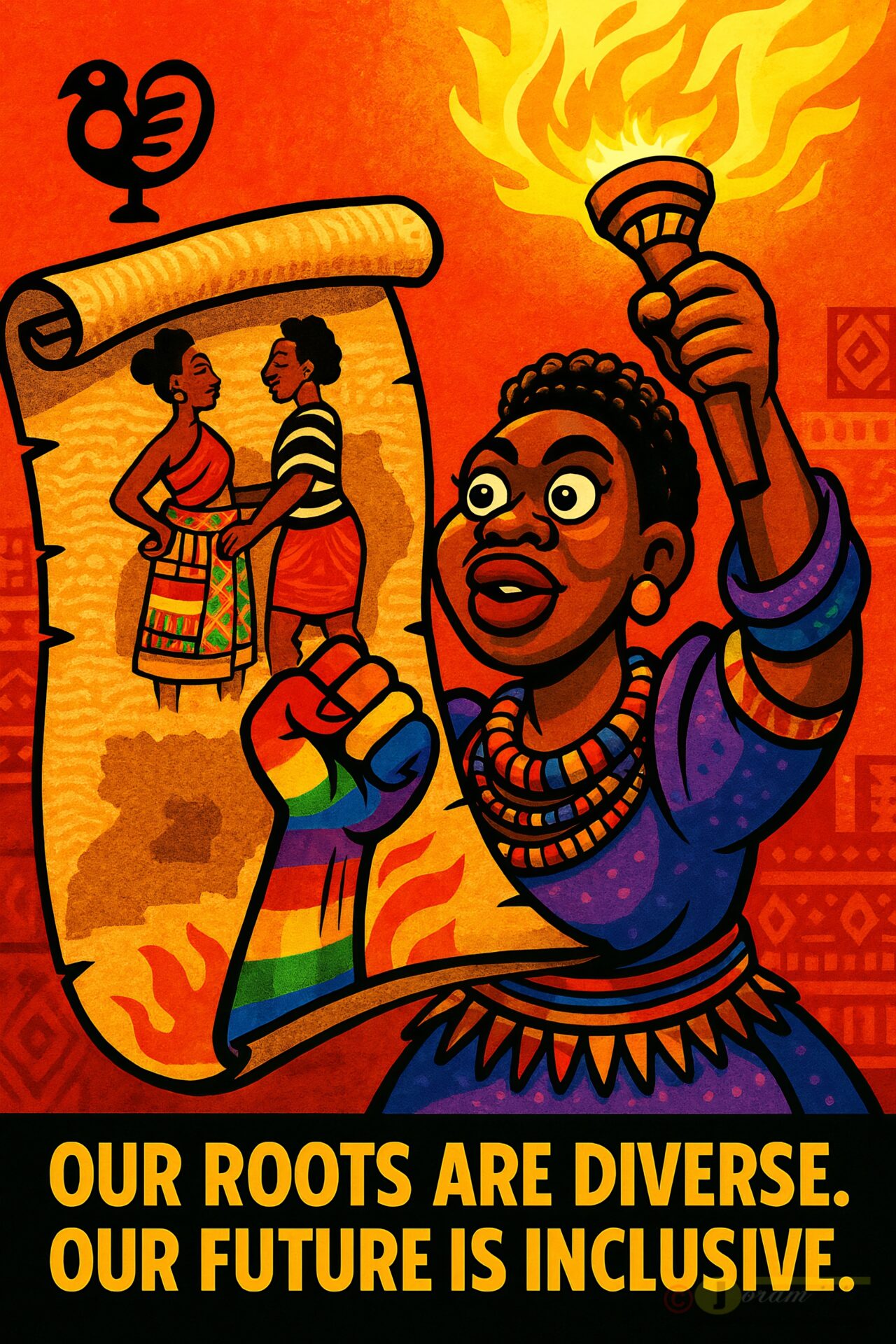 By proving that the roots of Ugandan identity are diverse and inclusive, the resistance seizes the regime’s most powerful weapon—the rhetoric of cultural authenticity—and turns it against them. They are demonstrating that the true defenders of Uganda’s heritage are not the dictators in State House, but those digging in the archives and listening to the whispers of the elders. The truth, now that its boots are on, is slowly beginning its journey, and with every recovered story, the regime’s lie becomes harder to sustain.
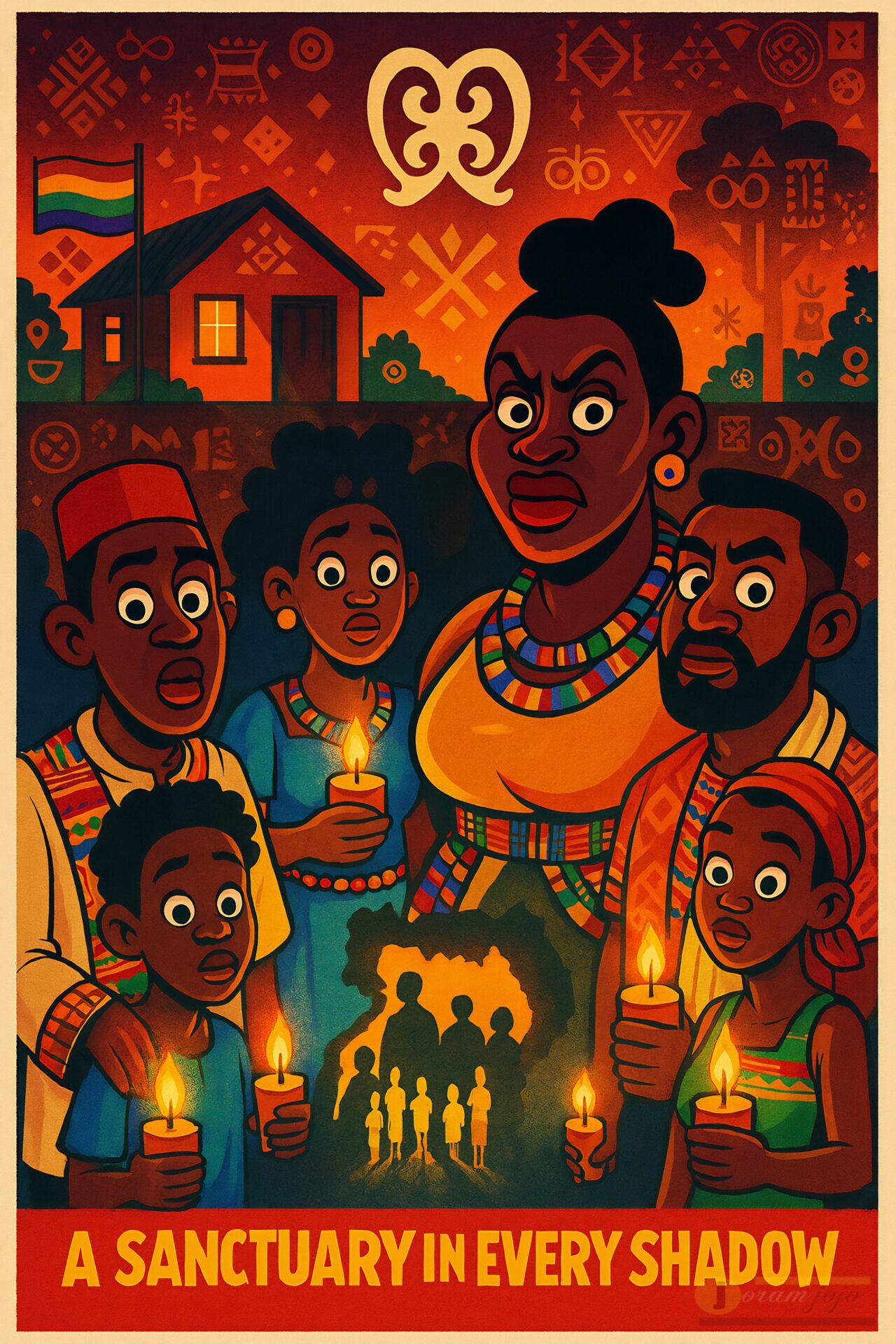 This forced a radical and immediate shift in strategy. The movement had to abandon any remaining vestiges of public-facing activism and plunge completely into the shadows. This was not a retreat, but a tactical recalibration for survival. The old, more centralised models of organisation were too vulnerable; a single raid could decapitate an entire network. The community was compelled to dismantle its own centralised structures and re-emerge as a hydra—a decentralised organism where cutting off one head meant little, as countless others operated independently.
 The regime finds itself in the futile position of trying to grasp smoke. The more violently it squeezes, the more the community disperses and permeates the cracks in the society itself. The AHA was meant to be a final solution, but it has instead functioned as a brutal and unforgiving training ground. It has taught the community the disciplines of secrecy, security, and mutual aid under extreme duress. The embers, scattered by the regime’s own heavy hand, have indeed started a wider, smarter, and more determined blaze—one that now glows in the hidden corners of every city and village, waiting for the day it can safely step back into the light.
 As the adage goes, “You cannot imprison a whisper that travels on a digital wind.” This new frontier of activism, waged through encrypted messaging and anonymous platforms, has become the most resilient and adaptive front in the battle for survival and liberation.
 They bypass state-controlled media to tell the human stories behind the headlines, ensuring that the regime’s crimes are catalogued and broadcast to a global audience. They are the unerasable record, the digital memory that refuses to be silenced.
 They conduct interviews via encrypted channels, protecting the identity of their sources. They receive leaked documents, videos of violence, and firsthand accounts of torture, verifying and disseminating them in a way that protects the vulnerable. This form of journalism is a high-stakes game of cat and mouse with state surveillance. The journalists are not seeking by-lines or fame; their success is measured by their continued anonymity and their ability to keep the information flowing without getting themselves or their sources arrested. They are the ghostwriters of a revolution, ensuring that the whispers of the oppressed are amplified into a chorus that the world cannot ignore.
 In essence, the regime’s attempt to impose a digital iron curtain has backfired. By forcing dissent into the encrypted realm, it has inadvertently fostered a smarter, more secure, and globally connected resistance movement. The digital wind, which the state cannot cage, carries with it the proof of life, the evidence of tyranny, and the unwavering whisper of a community that insists, against all odds, on its right to be seen and heard.
 Here, art has ceased to be mere decoration and has become a formidable weapon of existential resistance. This flourishing of underground culture is a direct rebuttal to the state’s narrative of shame, asserting that love and identity are not crimes, but wellsprings of beauty and strength. As the adage goes, “The most powerful whisper can drown out the loudest shout.” In the hidden galleries of Uganda, a chorus of whispers is rising, creating a resonance that the regime’s brute force cannot silence.
 These works are ephemeral; they are documented digitally and shared through covert channels before often being painted over to protect their creators, living on as ghostly images in a shared digital consciousness.

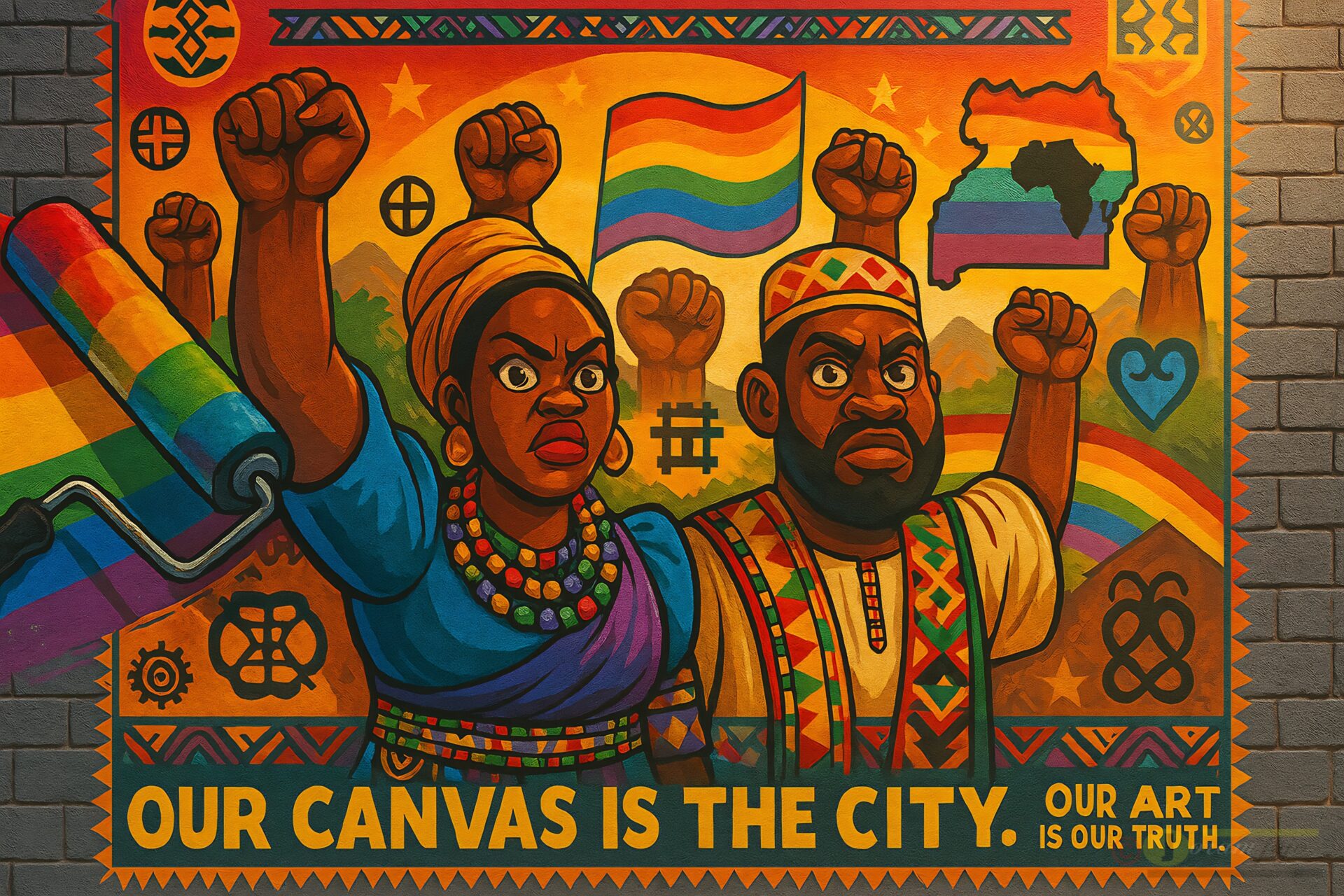


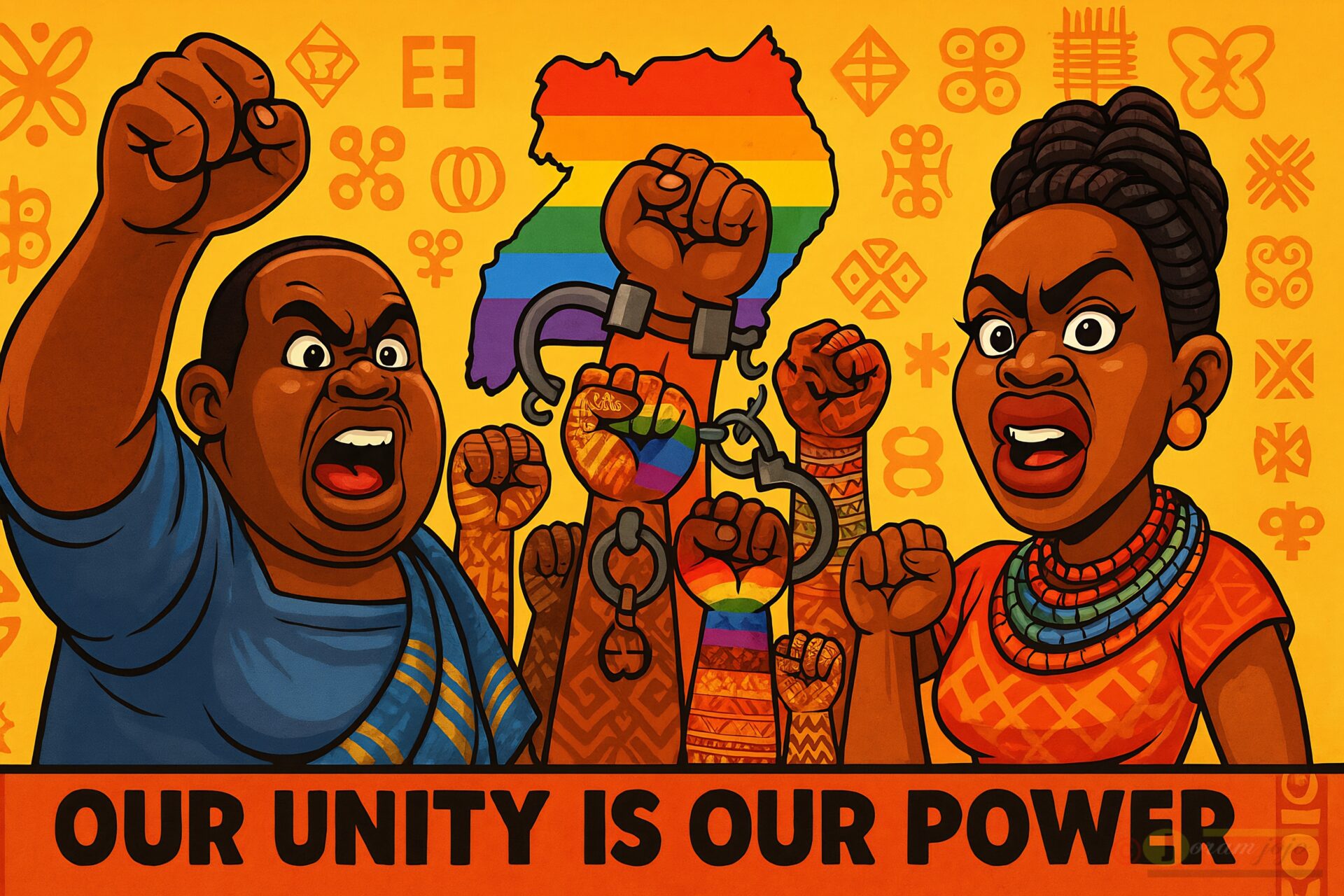


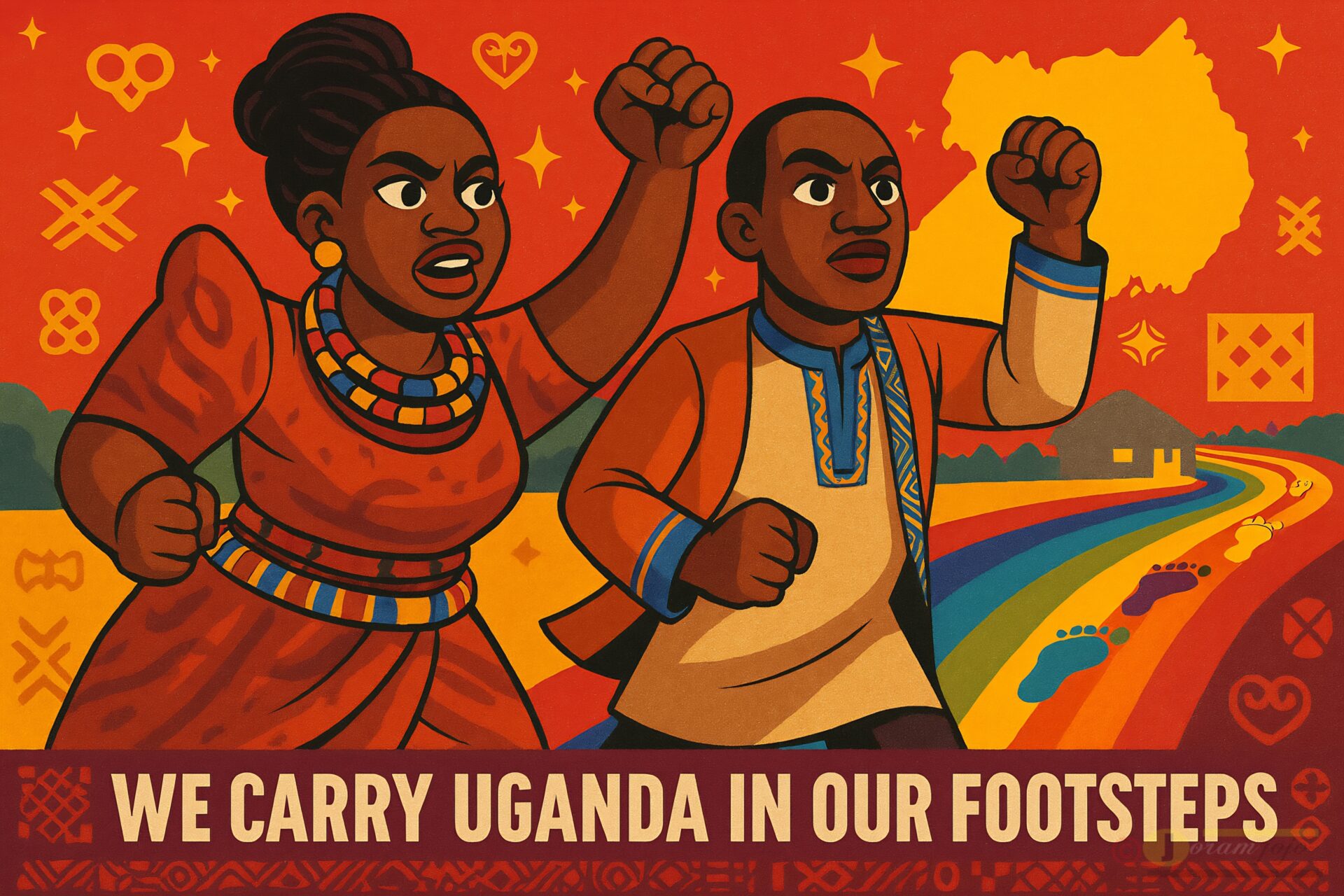

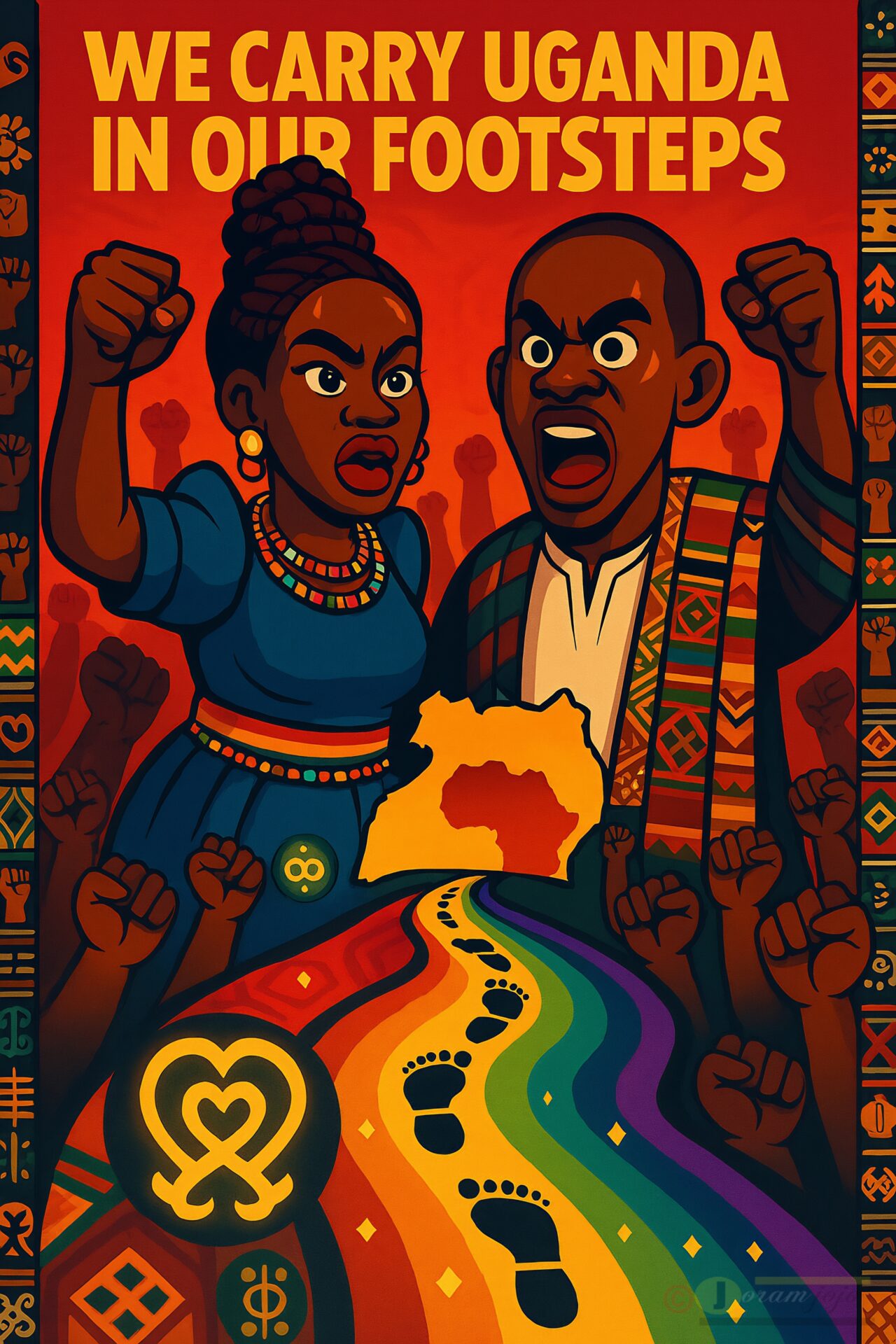 While the state may control the statutes and the security apparatus, it has no power over the imagination. The artists working in the shadows understand a fundamental truth: that a regime which must outlaw poetry and paintings is a regime that is already ideologically bankrupt. Their work ensures that long before the laws may change, the hearts and minds of a community are already living in the freedom of their own creation, proving that the canvas, however hidden, remains an unsilenced witness to their truth.
 A brave and growing contingent of progressive clergy and congregations is emerging, refusing to cede the pulpit to hatred. In a powerful act of theological resistance, they are preaching a gospel of inclusion, creating sanctuaries of safety, and reclaiming the figure of Christ from the politicians who have weaponised Him. As the adage goes, “The stillest waters often run the deepest.” While the public face of Ugandan Christianity may appear monolithic, these deep, still currents of progressive faith are carving a new path, offering a spiritual lifeline to those whom the state has cast out.
 Their sermons and teachings consciously pivot towards the core tenets of Christ’s ministry: compassion, mercy, and a preferential option for the marginalised. They cite his deliberate association with tax collectors, prostitutes, and lepers—the very outcasts of his day—as the definitive model for Christian conduct. In this theology, a person’s identity is not a sin; the real transgression is the hatred and exclusion practised by the powerful. They reframe the conversation from one of sexual purity to one of social justice, arguing that a faith that does not protect the vulnerable is a faith that has lost its way. This is not a liberal reinterpretation for convenience, but a return to what they see as the disruptive, radical love at the heart of the Christian message.

 In essence, this progressive Christian movement represents a critical fissure in the regime’s moral foundation. By asserting that true faith demands inclusion, they rob the state and its allied clerics of their claim to divine authority. They demonstrate that the battle for Uganda’s soul is not being waged solely in parliament or on the streets, but in the quiet, determined hearts of those who believe that God’s love, in its deepest expression, knows no borders and excludes no one.
 These groups are the bedrock of the movement, transforming isolation into community and despair into resilience through the simple, revolutionary act of mutual care. As the adage goes, “A chain of many small, weak links, if woven together, can form an unbreakable rope.” The Whisperers are those individual links, weaving a network of support so diffuse and deeply embedded that the state’s sledgehammer cannot sever it.
 This compartmentalisation is a critical security feature; the compromise of one group does not lead to the collapse of the entire network.
 It directly counters the regime’s narrative that queer Ugandans are a threat to the family unit by demonstrating that they are, in fact, masterful builders of their own, more inclusive families based on loyalty and love rather than coercion and blood.
 Their work is a masterclass in strategic patience, aiming not for a single, glorious victory, but for the gradual, deliberate erosion of the law’s foundation. As the adage goes, “Constant dripping wears away the stone.” These lawyers are the persistent, focused drip of water, chiselling legal cracks into the monolithic edifice of state-sponsored persecution.
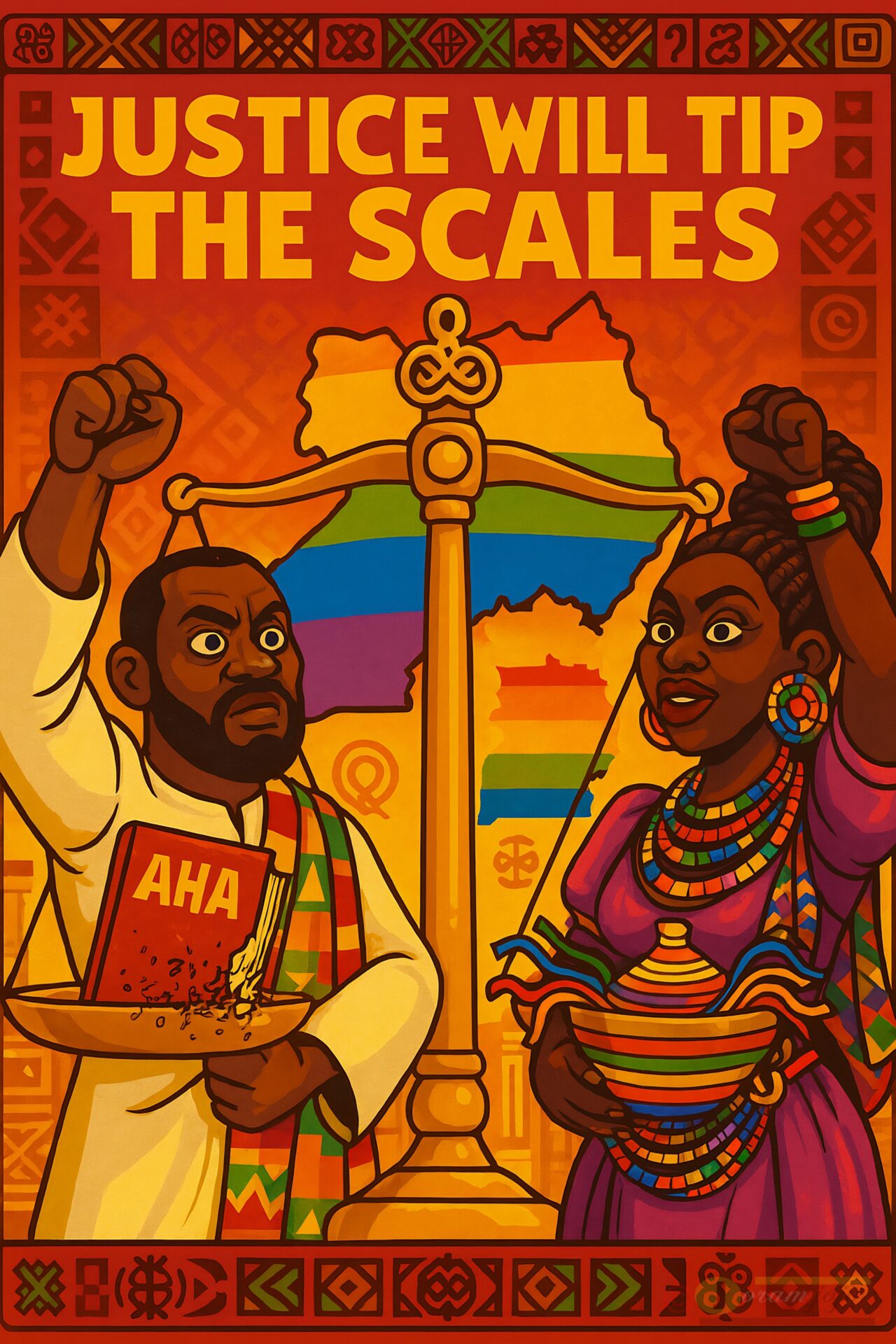 Their court appearances are high-stakes theatrical performances. They must present their arguments with unassailable legal rigour, knowing that any misstep could be used to discredit not just a single case, but the entire legal strategy. They often represent clients who are terrified and traumatised, requiring them to be not only advocates but also sources of reassurance and stability. Every procedural win—a bail application granted, an unjust charge dismissed—is a tactical victory that keeps a client out of prison and maintains the momentum of their broader campaign.
 By forcing the state to defend the AHA in a legal forum, these lawyers compel the regime to move beyond populist rhetoric and engage in a rational debate it is often ill-equipped to win on legal merits. They are slowly, painstakingly creating a body of jurisprudence that stands as a permanent, documented indictment of the law. They understand that while the dictator may control the legislature, the battle for the soul of the nation’s legal framework is still being fought, and they are the ones holding the line, drip by deliberate drip, ensuring that the stone of injustice cannot stand forever.
 As the adage goes, “He who wears the shoe knows best where it pinches.” The diaspora, having escaped the immediate pinch, can provide resources and shout about the pain, but they must defer to those who still walk in the shoes every day.
 This can include targeted sanctions against specific architects of the Anti-Homosexuality Act, the freezing of aid, and the imposition of visa bans, applying external pressure that the internal movement alone cannot generate.
 Without this financial pipeline, the internal resistance would be immeasurably more vulnerable.
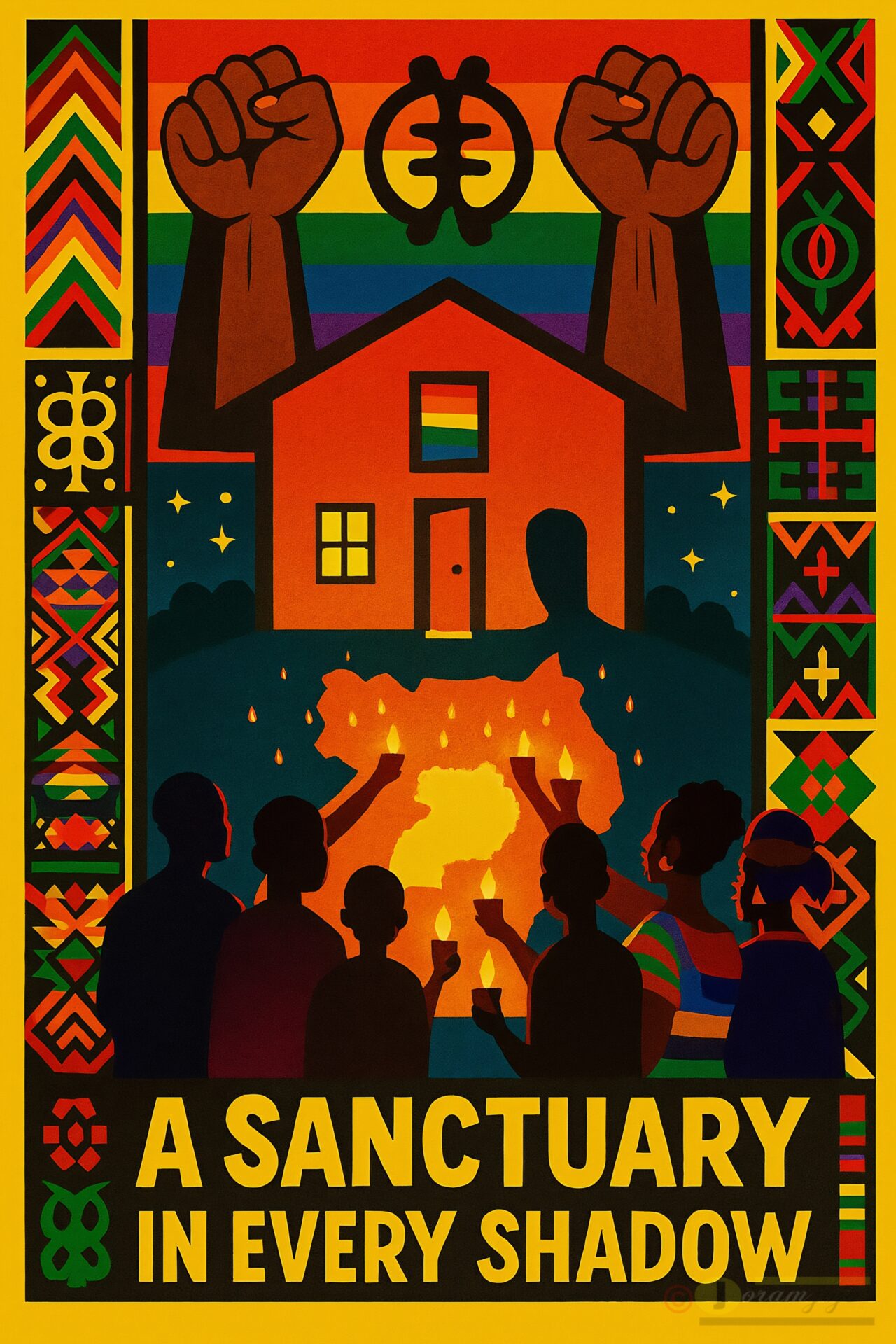 It is a testament to a profound truth: that while the state can legislate hatred, it cannot outlaw the fundamental human impulse to offer shelter and stand in solidarity with the persecuted. As the adage goes, “A single candle can light a thousand more, and never be diminished.” Each safe house is such a candle, its flame guarded fiercely, its light passed on through a chain of trust to pierce the darkness of state-sanctioned terror.
 This environment of constant fear and state-sanctioned stigma inflicts a deep and corrosive psychological toll, creating wounds that are invisible to the eye but crippling to the spirit. In response, a quiet, heroic network of secret support groups and discreet counsellors has emerged, operating in the shadows to provide a critical lifeline. They perform the essential work of helping shattered individuals reassemble their inner selves, navigating the profound trauma of living under a threat that is as pervasive as the air they breathe. As the adage goes, “The heaviest chains are those which are unseen.” The work of these mental health practitioners is to pick the locks on these internal shackles, offering a glimpse of freedom to minds imprisoned by fear.
 The validation they receive from peers—”What you are feeling is a normal response to an abnormal situation”—is a crucial step towards healing.
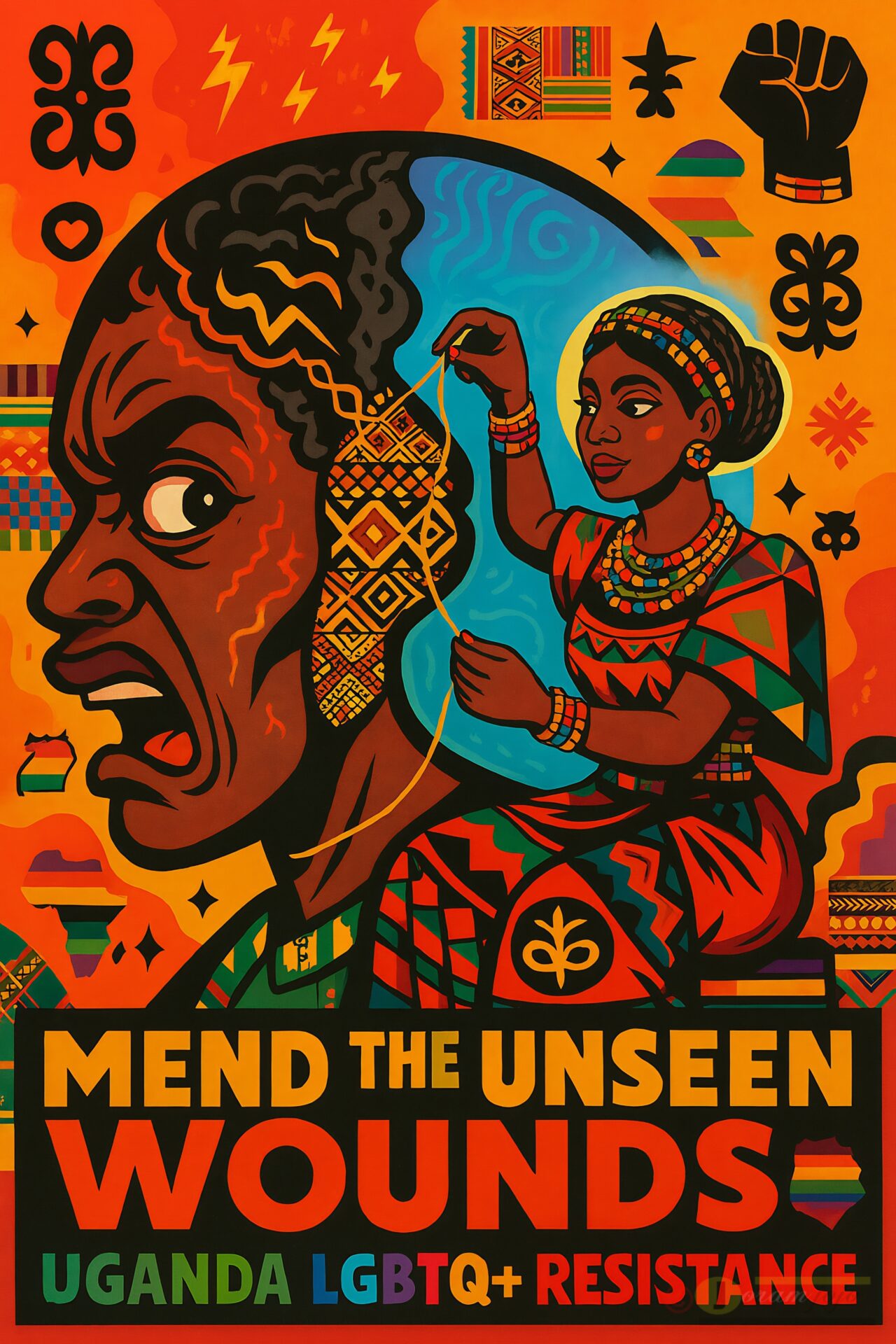 It allows them to externalise the blame, placing it on the regime and its laws where it belongs, and beginning the process of reclaiming their own mental landscape.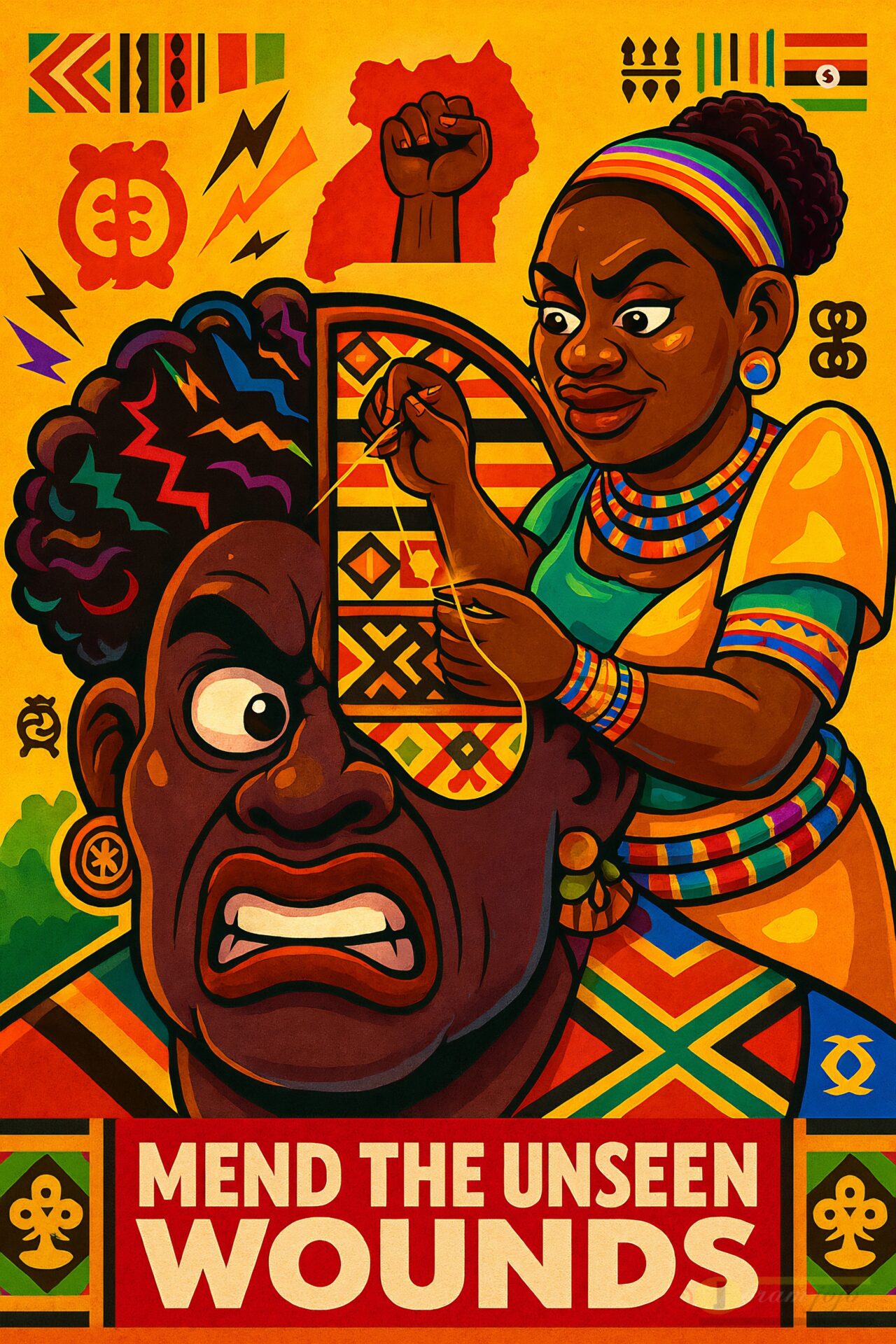
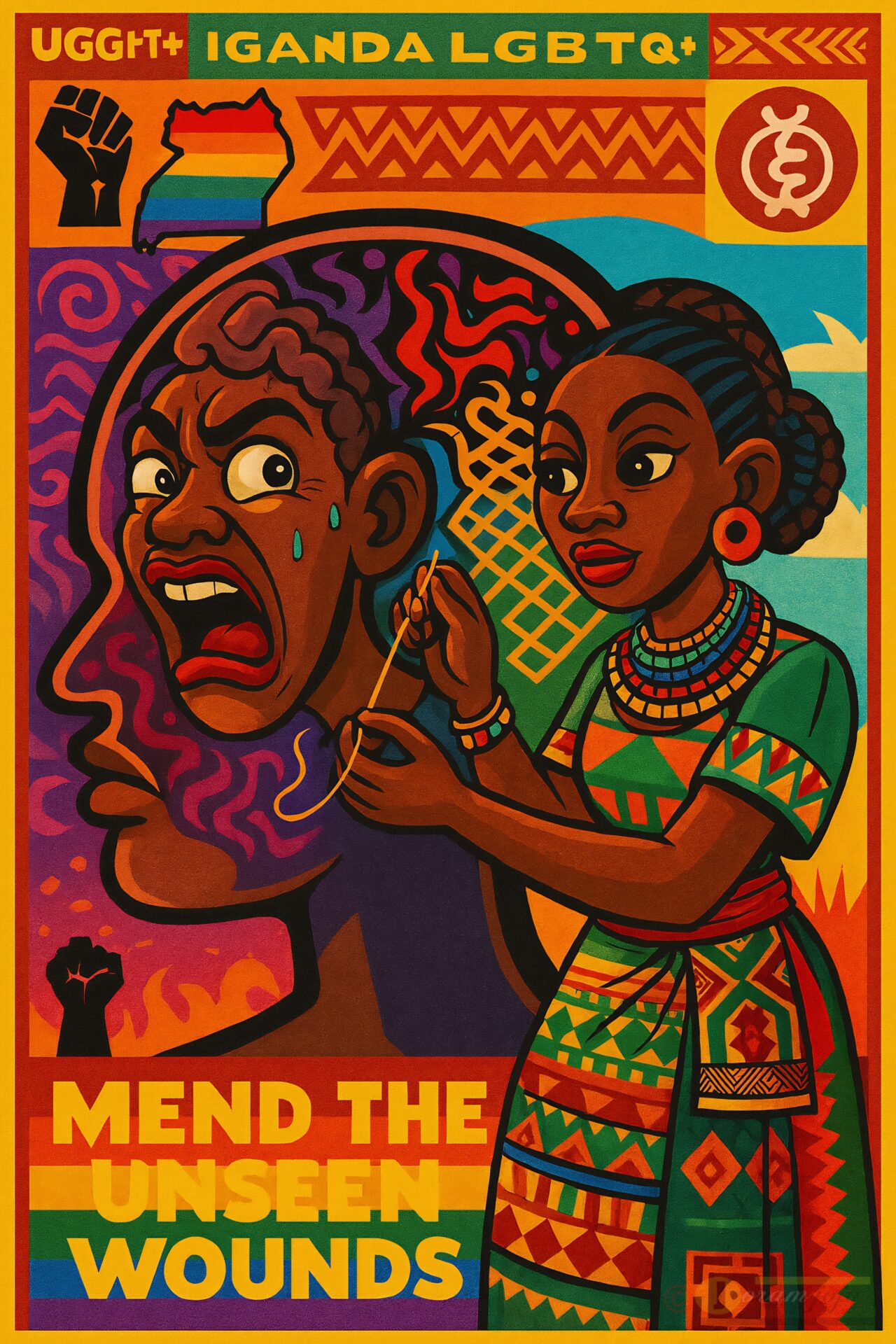 By tending to the unseen wounds, they are fortifying the very foundation of the resistance, ensuring that the community possesses not just the will to survive, but the psychological strength to one day prevail.
 As the adage goes, “A story is a window where a law is only a wall.” Where the state builds walls of legal prohibition, storytellers are carving out windows, allowing the light of shared human experience to shatter the cold, dark facade of bigotry.
 This literature transforms the abstract “promotion of homosexuality” into an intimate chronicle of the universal human quest for connection and dignity, making it impossible to dismiss.
 By transforming themselves from a political issue into a chorus of human beings with names, dreams, and heartaches, they ensure that the regime is not fighting an ideology, but a mirror reflecting the undeniable truth of their existence. And as history shows, while walls can be built, they invariably fall; but a story, once told, can never be unheard.
 They are a vital and potent form of resistance, creating pockets of financial autonomy that shield individuals from the most devastating forms of coercion. As the adage goes, “A man who owns his own purse is a man who owns his own soul.” In the context of Uganda, economic empowerment is the process by which queer individuals reclaim ownership of their lives, one shilling at a time.
 These co-operatives spread financial risk and create a support network, blending economic empowerment with the crucial psychosocial support of the “Whisperer” groups.
 By building an informal economy of liberation, the resistance is systematically dismantling the regime’s most potent tool of control, proving that true freedom requires not just the right to love, but the means to live.
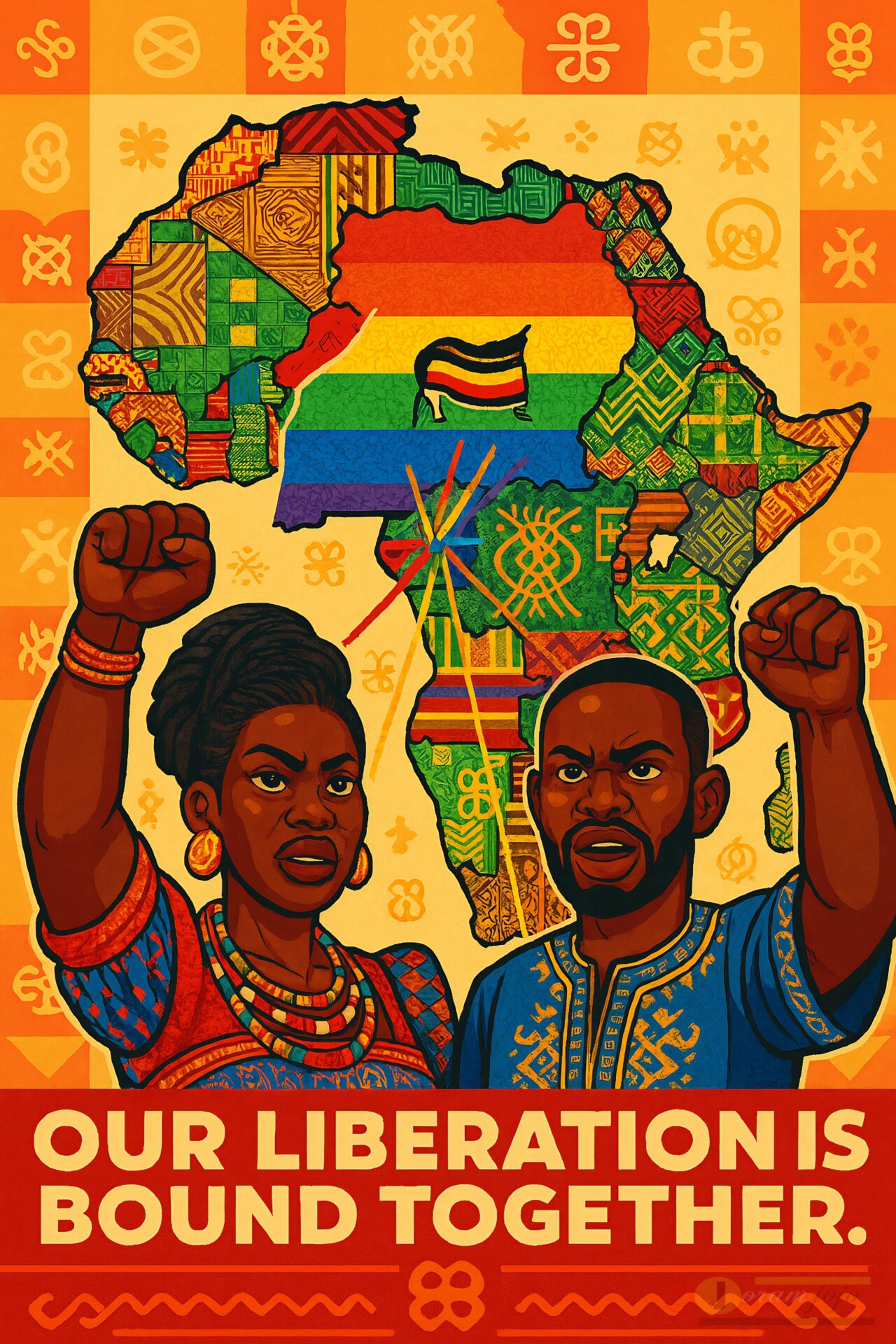 As the adage goes, “He who lives in a glass house should not throw stones.” The resistance has masterfully exposed the regime’s sovereignty rhetoric as a fragile glass construct, built upon a foundation of imported, colonial-era prejudice.

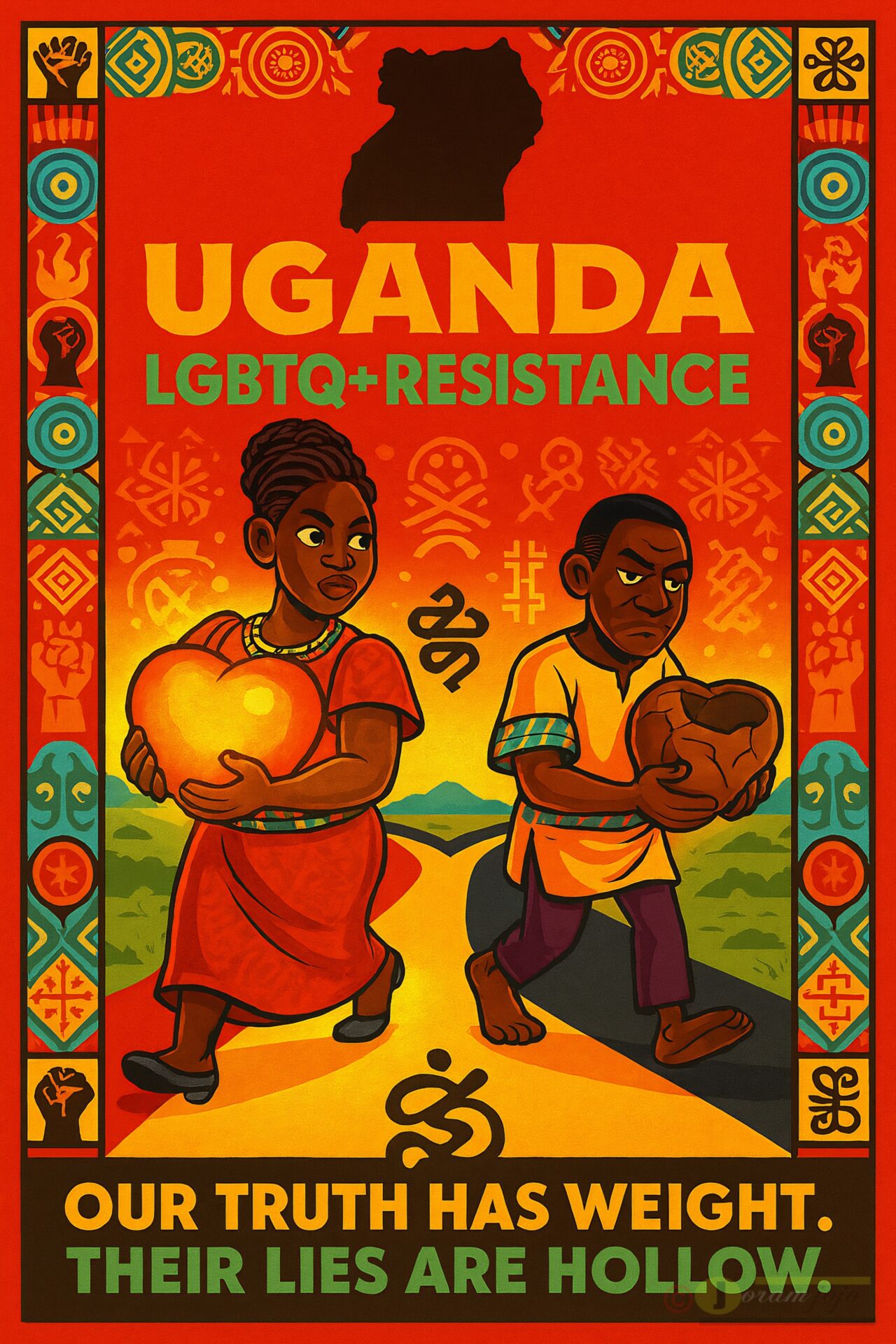

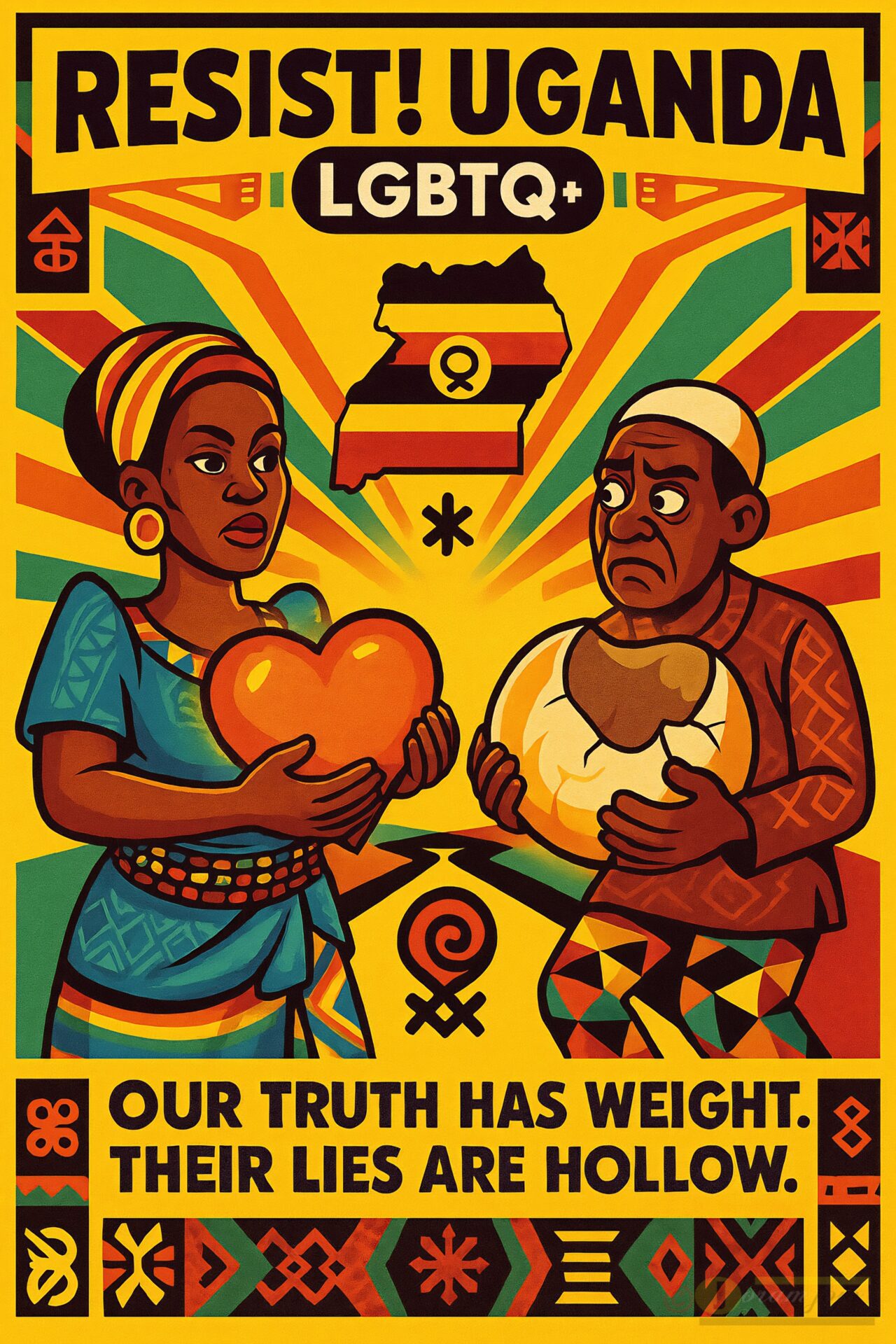
 This network creates a powerful counter-narrative: that LGBTQ+ liberation is an African issue, led by Africans, for Africans.
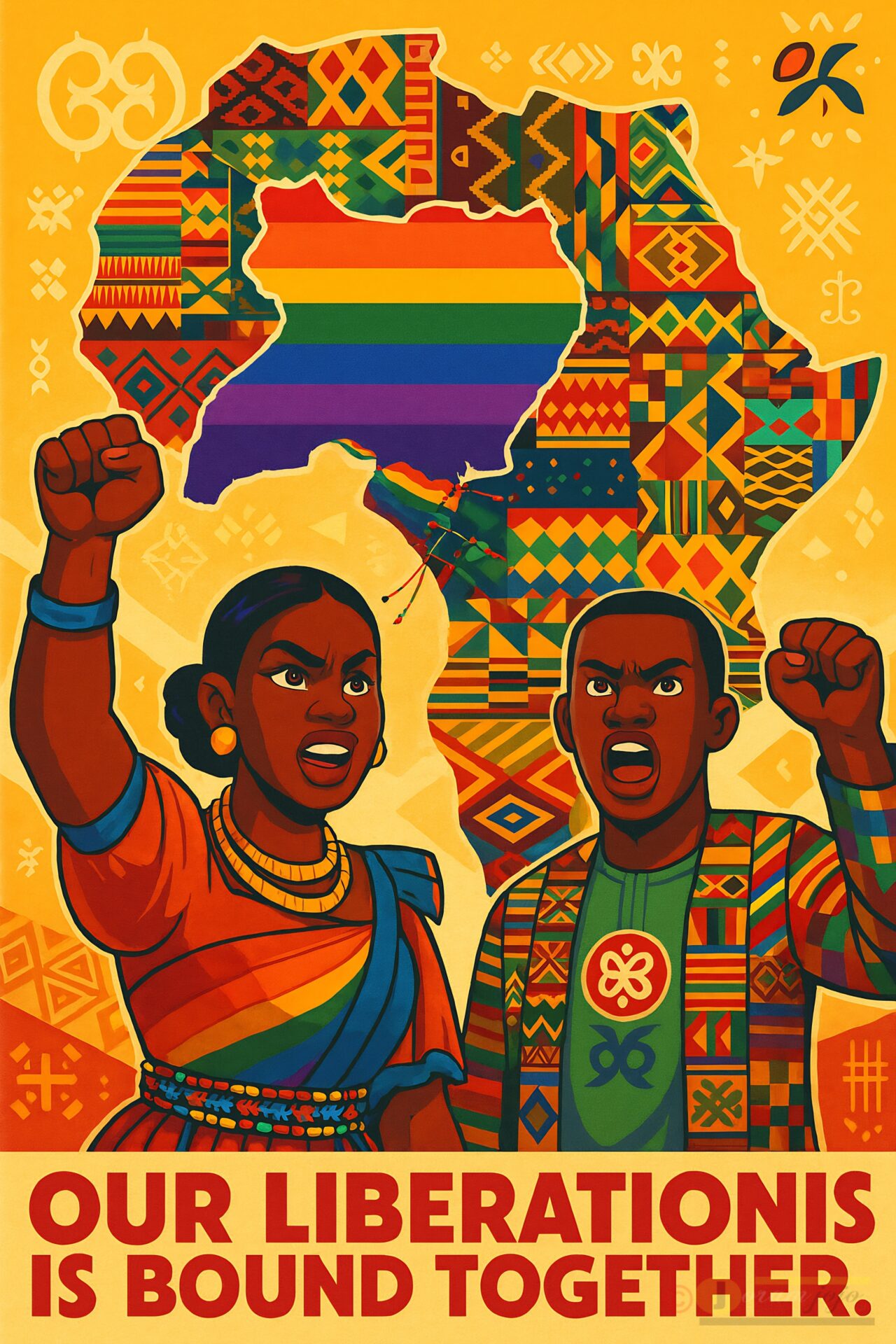 It is no longer a debate between Ugandan tradition and foreign values, but a struggle between an autocratic regime clinging to a colonial past and a liberation movement fighting for a truly sovereign, inclusive, and decolonised African future. The glass house of the regime’s rhetoric now stands exposed, cracked and fragile, as the voices from within and across the continent demand a freedom that is, and has always been, their own.
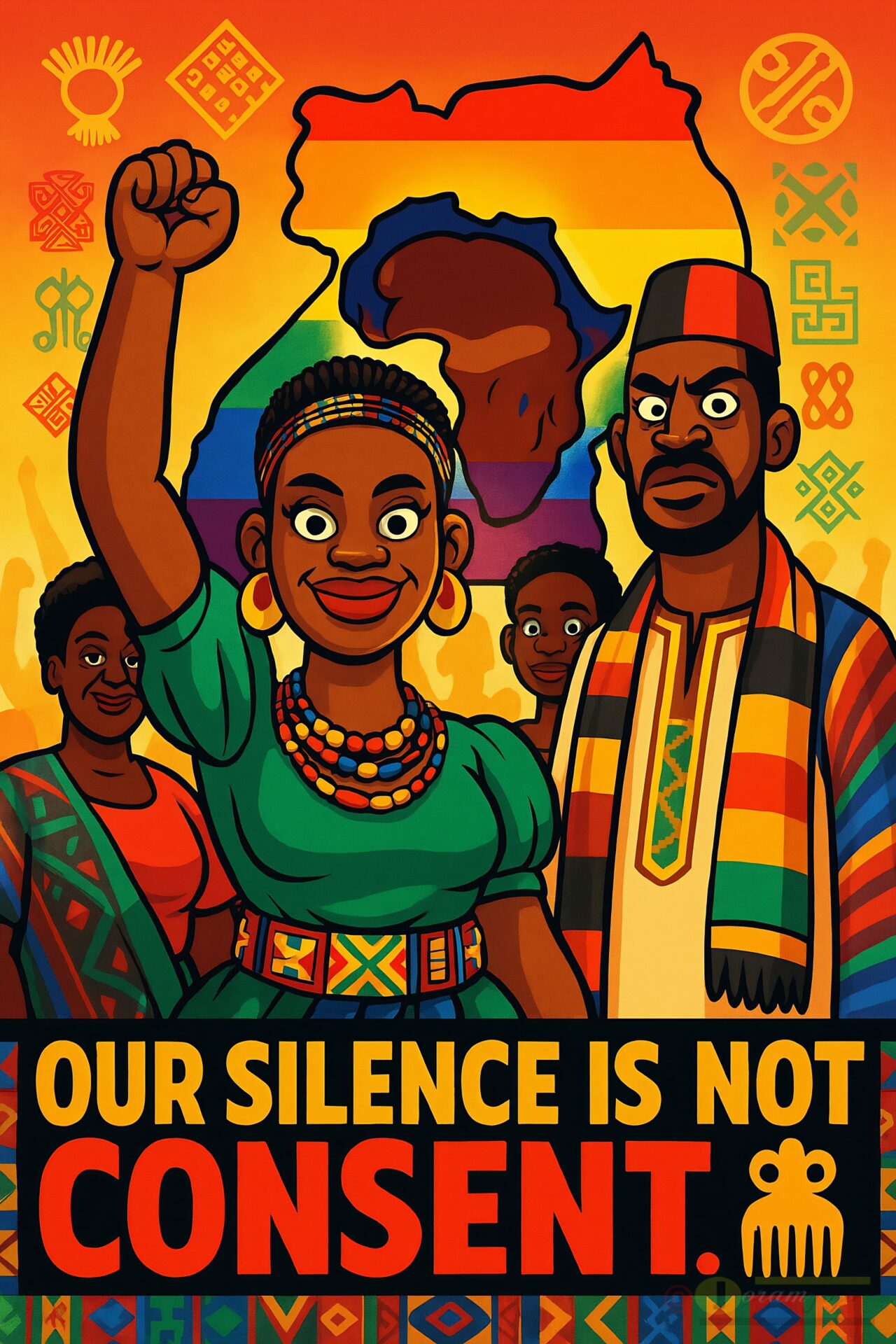 As the adage goes, “The wolf does not mind if the sheep’s clothing is used for a disguise, so long as it brings the whole flock into disrepute.” Fraudulent asylum claims are the wolf in borrowed fleece, jeopardising the safety of every genuine LGBTQ+ individual seeking refuge.
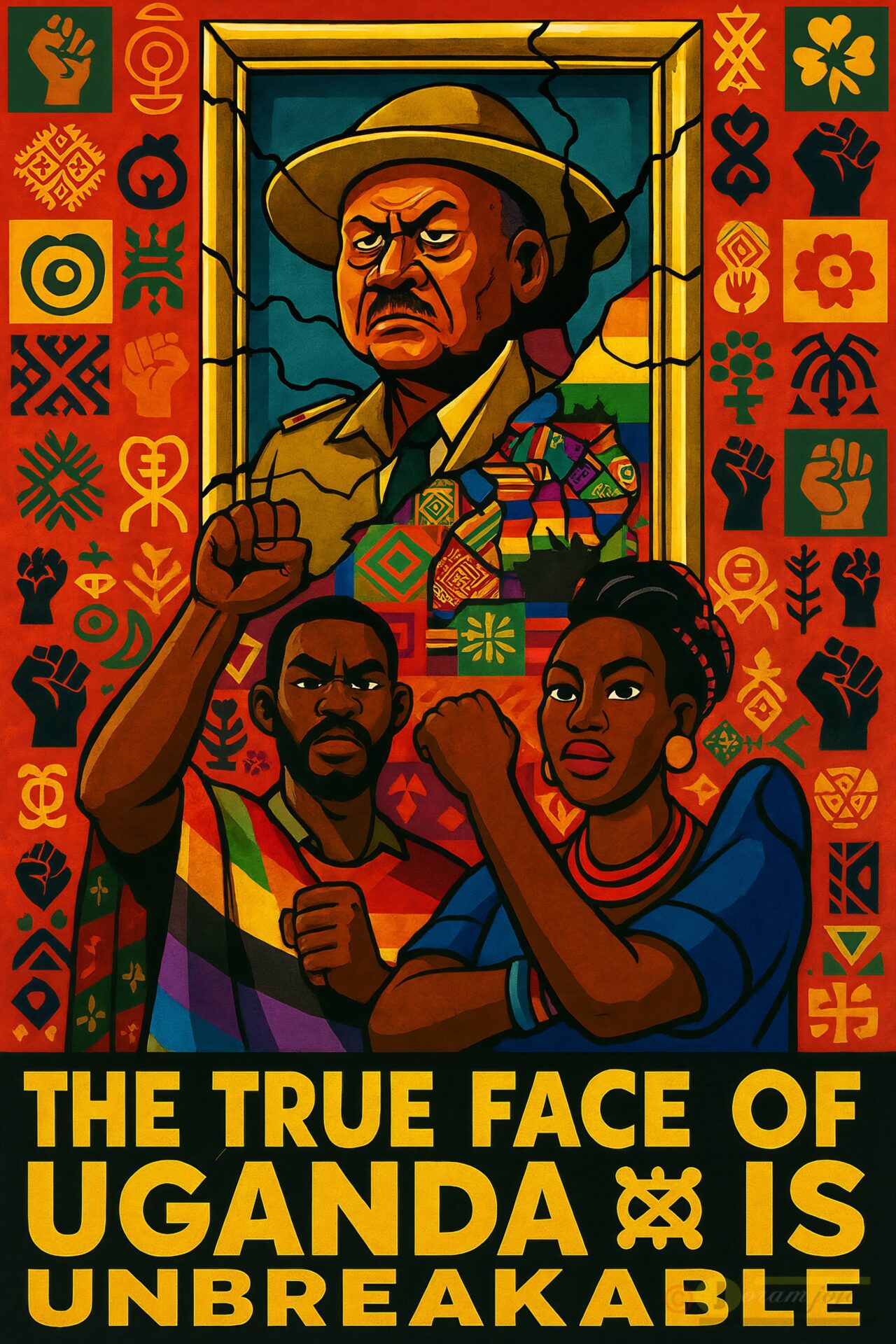 The resistance movement, understanding that this rhetorical fortress must be dismantled, has embarked on a meticulous campaign to debunk this myth. They do so not by rejecting Ugandan identity, but by reclaiming it, showcasing the rich diversity of Ugandan thought and proving that the regime’s “values” are neither universally held nor authentically African. As the adage goes, “A single voice cannot create a chorus, no matter how loudly it shouts.” The resistance is proving that the regime’s booming solo performance is drowning out a multitude of other, dissenting Ugandan voices.
 Furthermore, they contrast the government’s fervent defence of “morality” with its rampant corruption, its failure to provide basic services, and its erosion of democratic institutions, arguing that true African values include integrity, accountability, and community care—values the regime itself consistently violates.
 In conclusion, the battle over “moral sovereignty” is a battle for the soul of the nation. The regime offers a simplistic, punitive, and exclusive version of Ugandan identity. The resistance counters with a vision that is complex, compassionate, and inclusive. By proving that the regime’s narrative is a fabrication—a loud solo voice pretending to be a chorus—the resistance is not just fighting a law. It is fighting for the right to define what it means to be Ugandan, championing a future where the nation’s strength is measured by its commitment to justice for all, not by its capacity for hatred against a few.
Considering Counterarguments: Deconstructing the Pillars of Justification
To fully comprehend the landscape of the debate surrounding the Anti-Homosexuality Act (AHA), it is essential to engage seriously with the arguments put forward by the state and its supporters. The regime of Dictator Museveni and its allied institutions have constructed a justification for the law that rests on three central pillars: popular will, cultural defence, and national sovereignty. A robust understanding of the resistance requires not a dismissal of these points, but a meticulous deconstruction of their foundations, revealing the contradictions and strategic omissions upon which they are built.
The Pillar of Popular Will: A Manufactured Consensus
The Government’s Position: The state consistently asserts that the AHA is a direct reflection of the will of the Ugandan people, a democratic expression of a shared moral consensus against homosexuality.
The Resistance’s Rebuttal: The resistance movement challenges this by highlighting the profound difference between manufactured consent and genuine popular will.
The Climate of Coerced Acquiescence: In a political environment where dissent is often equated with treachery and can carry severe social, economic, and legal consequences, public agreement is not a reliable metric. The resistance argues that the appearance of universal support is a facade maintained by fear. The regime’s relentless propaganda, broadcast through state-influenced media and amplified by allied religious leaders, creates an echo chamber that marginalises alternative viewpoints before they can be publicly voiced.
The Existence of a Silent Majority: Activists point to the significant, though often silent, segment of the population that is ambivalent, privately compassionate, or actively opposed to the law. This includes parents who fear for their LGBTQ+ children, faith leaders who believe in a theology of inclusion, and citizens who prioritise issues of poverty, healthcare, and corruption. Their silence is not consent; it is a rational response to a political climate that punishes deviation from the official line. As the adage goes, “Silence is not always agreement; sometimes it is the loudest form of protest.” The resistance works to give this silent dissent a voice, demonstrating that the regime’s claim to a monopoly on public opinion is a fiction.
The Pillar of Cultural Defence: A Question of Authenticity
The Government’s Position: The AHA is framed as a necessary defence of “African values” and “Ugandan culture” against a wave of foreign, Western immorality.
The Resistance’s Rebuttal: This is perhaps the most potent argument, and the resistance meets it with a powerful historical counter-narrative.
The Colonial Imposition Reframed: The movement expertly reframes the debate by identifying the true foreign imposition. They argue that the criminalisation of homosexuality is not an indigenous African value but a Victorian-era legal construct imposed by British colonial administrators through laws like the Indian Penal Code’s Section 377. Therefore, the AHA is not a defence of African tradition but the perpetuation of a colonial relic. To resist the AHA, in this light, is an act of decolonisation—an effort to purge Ugandan statute books of a foreign moral code that was forced upon it.
Reclaiming a Pre-Colonial Heritage: Scholars and activists within the movement point to historical and anthropological evidence of diverse sexualities and gender expressions in pre-colonial Ugandan societies. By highlighting figures like the mudoko dako among the Lango or certain spiritual roles in the Buganda kingdom, they demonstrate that the current rigid, binary view of sexuality is the imported one, thereby severing the regime’s claim to cultural authenticity.
The Pillar of National Sovereignty: A Betrayal of Constitutional Duty
The Government’s Position: The regime portrays international criticism of the AHA as an attack on Ugandan sovereignty, an unacceptable effort by Western nations to impose their values and override national self-determination.
The Resistance’s Rebuttal: The resistance offers a more profound and constitutionally grounded definition of sovereignty.
Sovereignty as the Protection of All Citizens: They argue that true national sovereignty is not merely the right of a state to be free from external interference, but its fundamental duty to protect the rights, dignity, and security of all its citizens, without exception. By actively persecuting a minority, the state is not defending its sovereignty; it is betraying it. A government that violates the constitutional rights of its people to privacy, dignity, equality, and freedom from discrimination undermines the very legitimacy of its own authority.
Selective Sovereignty and Hypocrisy: The movement highlights the hypocrisy of a regime that fiercely defends its “sovereign” right to persecute its own citizens, while often acquiescing to other foreign interests in areas like economic policy and resource extraction. This selective application of the sovereignty principle reveals it to be a political tool rather than a principled stand.
In conclusion, the resistance does not dismiss the regime’s arguments out of hand. Instead, it engages in a sophisticated intellectual and historical battle, demonstrating that the pillars of “popular will,” “cultural defence,” and “sovereignty” are constructed on shaky, ahistorical, and fundamentally undemocratic ground. By exposing these foundations as flawed, the resistance seeks to win the most crucial battle of all: the battle for the narrative soul of Uganda itself.
A Conclusion Not Yet Written: The Unfinished Symphony of Defiance
The struggle for LGBTQ+ freedom in Uganda remains a story without a final chapter. The legal landscape, sculpted by Dictator Museveni’s regime into an instrument of brutal oppression, ensures that the path ahead is fraught with peril. The spectre of the Anti-Homosexuality Act continues to cast a long, chilling shadow over daily life, a constant reminder of the state’s power to punish identity itself. Yet, to define this narrative solely by the weight of its oppression is to miss its most defining characteristic: the profound and unyielding agency of the human spirit. The resistance movement, in all its layered complexity—from the courtrooms to the clandestine support groups—has masterfully rewritten a story of intended victimhood into an epic of courageous self-determination.

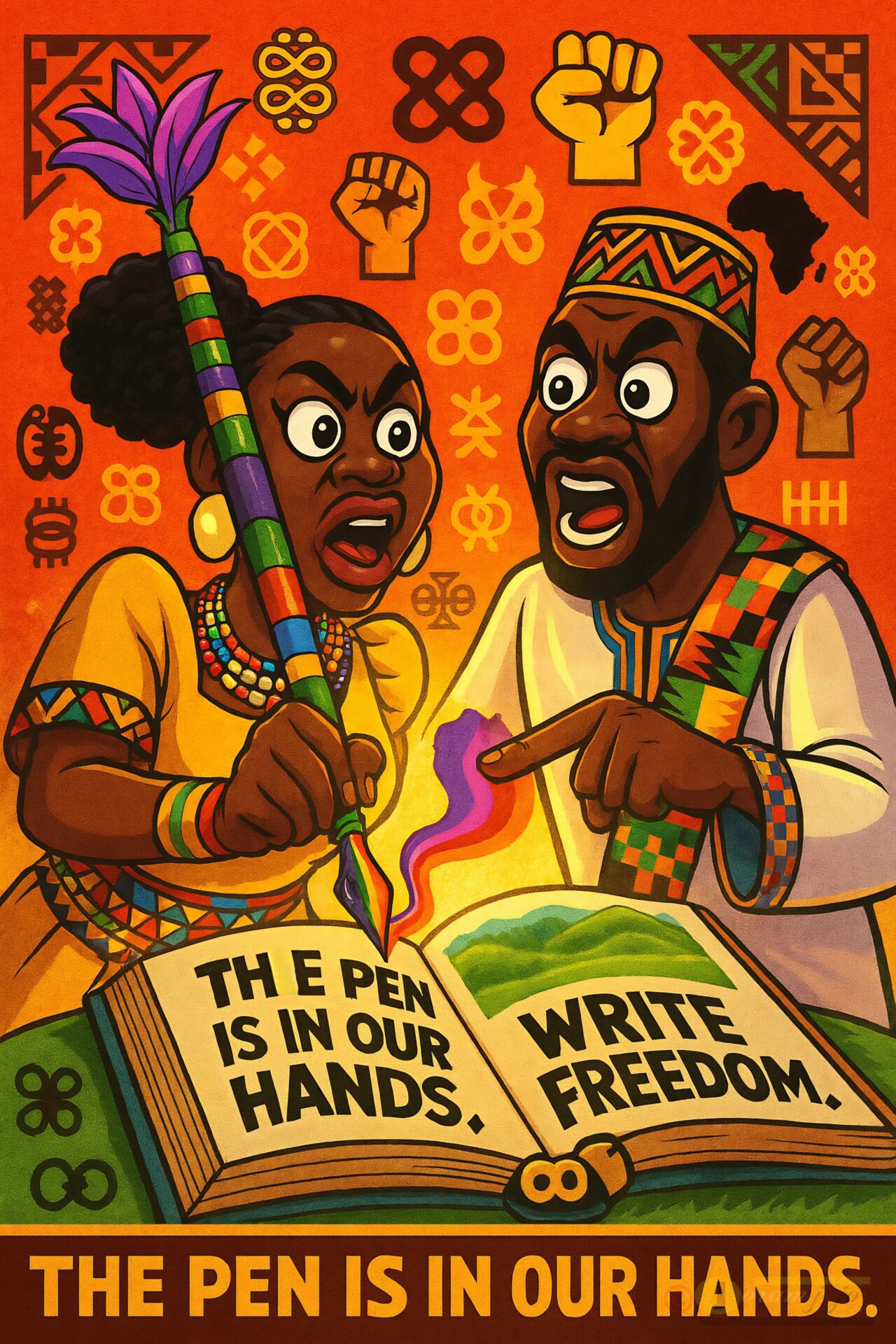

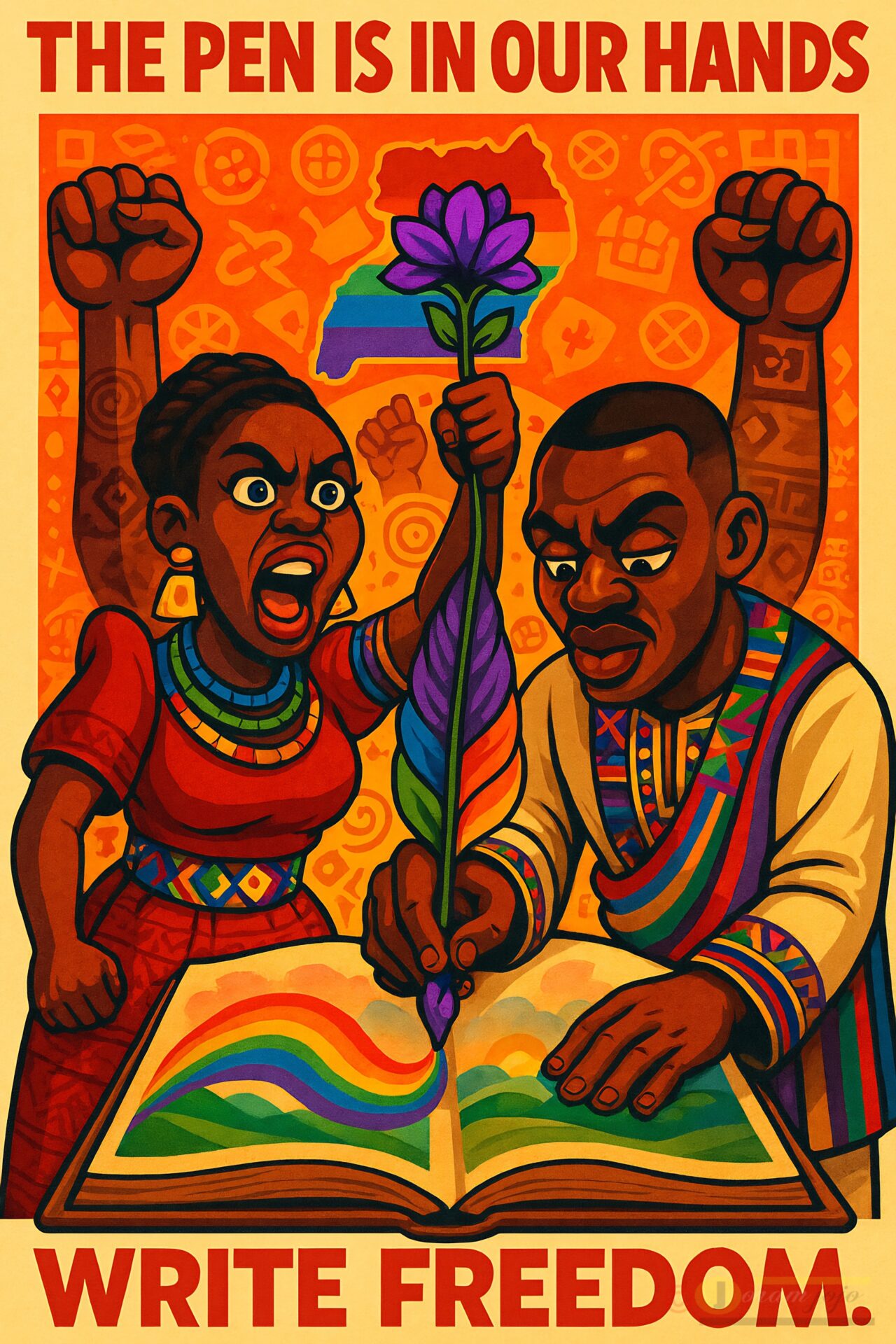




 This is a chronicle still being composed, its verses inscribed not on parchment, but in the hidden poetry of a Makerere University student, the quiet benediction of a dissident pastor, the encrypted signal that flashes a warning across the city, and the stubborn hope that flickers, undimmed, according to a community that categorically refuses to be erased. The struggle has been forced underground, but in that fertile darkness, it has taken root and flourished in ways the regime could never have anticipated. It has become a symphony of whispers, each one a note of defiance that, when heard together, forms a melody of resilience too powerful to be silenced by force of law.
The ancient jacaranda trees of Kampala, their purple blooms a fleeting spectacle of beauty against the urban grit, have stood as mute witnesses to decades of political upheaval. They now observe a different kind of revolution—a quieter, deeper insurrection of the human conscience. They have noticed that the most formidable walls, be they of prejudice, fear, or legislation, do not always fall to a single, dramatic blow. More often, they are slowly, inexorably worn down by the persistent drip of truth, the gentle but relentless push of courage that will not be cowed. “The mightiest oak will eventually fall to the persistent tap of the smallest woodpecker,” and the resistance has become a flock of such determined birds, each act of existence a tap against the boot of state-sanctioned hatred.
The future of Uganda now hangs in a delicate balance, poised between a past defined by fear and a potential future illuminated by freedom. The ultimate destiny of the nation will be determined by a single, collective choice: whether it will finally lean in and listen to the chorus that has been growing, against all odds, from a whisper to a resonant hum. It is a choice between clinging to the brittle, imported prejudices of a bygone colonial era, or embracing the transformative, authentic justice of a nation confident enough to protect all its children. The final chapter of this story has not yet been written. Its conclusion awaits the courage of a nation to choose transformation over tyranny, and to finally grant its most vulnerable citizens the liberty to simply be.
Disclaimer: The narratives and examples cited in this article are inspired by the real-life experiences and reporting on the Ugandan LGBTQ+ community. Names, specific locations, and identifying details have been altered or presented in a composite manner to protect the safety and security of individuals on the ground.